Air conditioning systems sit idle for four to six months over winter in Mediterranean homes. During that time, dust settles in the filters and vents. Moisture condenses inside the pipes and the outdoor unit. The refrigerant settles. If the unit isn't regularly used, the compressor oil can thicken. When you turn the system back on after a long break, it's waking up from a deep sleep. Most of the time it wakes up fine. Sometimes, dust, moisture or a small fault becomes obvious only when the system starts moving refrigerant and electricity through its pipes again.
This is especially true in coastal properties, where salt air and humidity speed up corrosion of the metal parts. If you live in an urbanisation (a gated community of villas or flats), the outdoor units are often clustered, and one person's neglected unit can affect the shared electrical circuit.
Dirty filters. If the mesh filter is dusty, switch the unit off. Slide out the filter panel (consult the manual if you're unsure). Tap the filters gently over a bin to shake out loose dust. If they're heavily caked, rinse them under lukewarm running water, squeeze gently (never wring), and let them dry completely in the sun or indoors for at least two hours before reinstalling. Never run the unit with wet filters.
Dust on the outdoor unit. If the metal fins of the condenser are visibly clogged with dust or cobwebs, switch off the unit. Using a soft brush or old toothbrush, gently brush the fins horizontally (always in the direction of the fins, never against them, or you'll bend them). Do not use a jet wash or hose — water pressure can damage the delicate aluminium fins. If there's a bird's nest, dead leaves or large debris stuck to the unit, remove it carefully by hand, or leave it for the technician.
Mild musty smell on first startup. This is normal. Dust and condensation residue burn off when the system restarts. Run the unit in ventilation mode (no cooling) for 10 minutes with windows open. The smell should fade. If it persists for more than 20 minutes or becomes a chemical or burnt smell, stop the unit immediately.
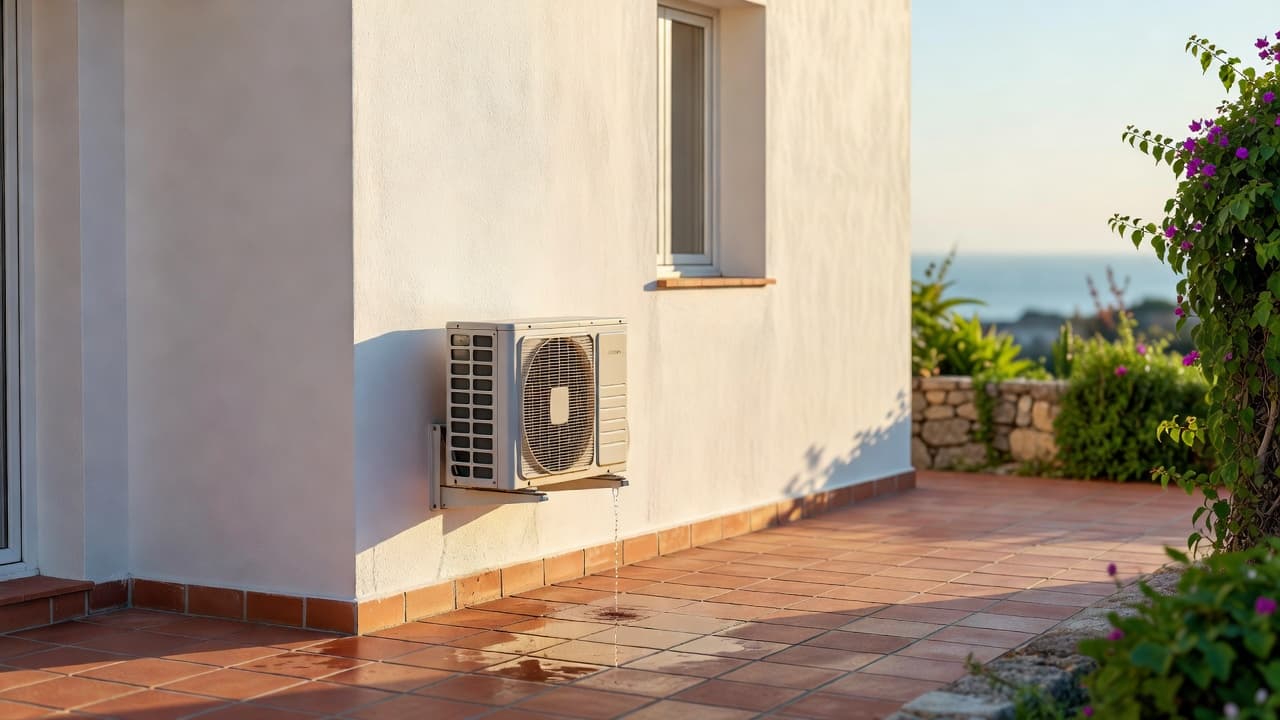
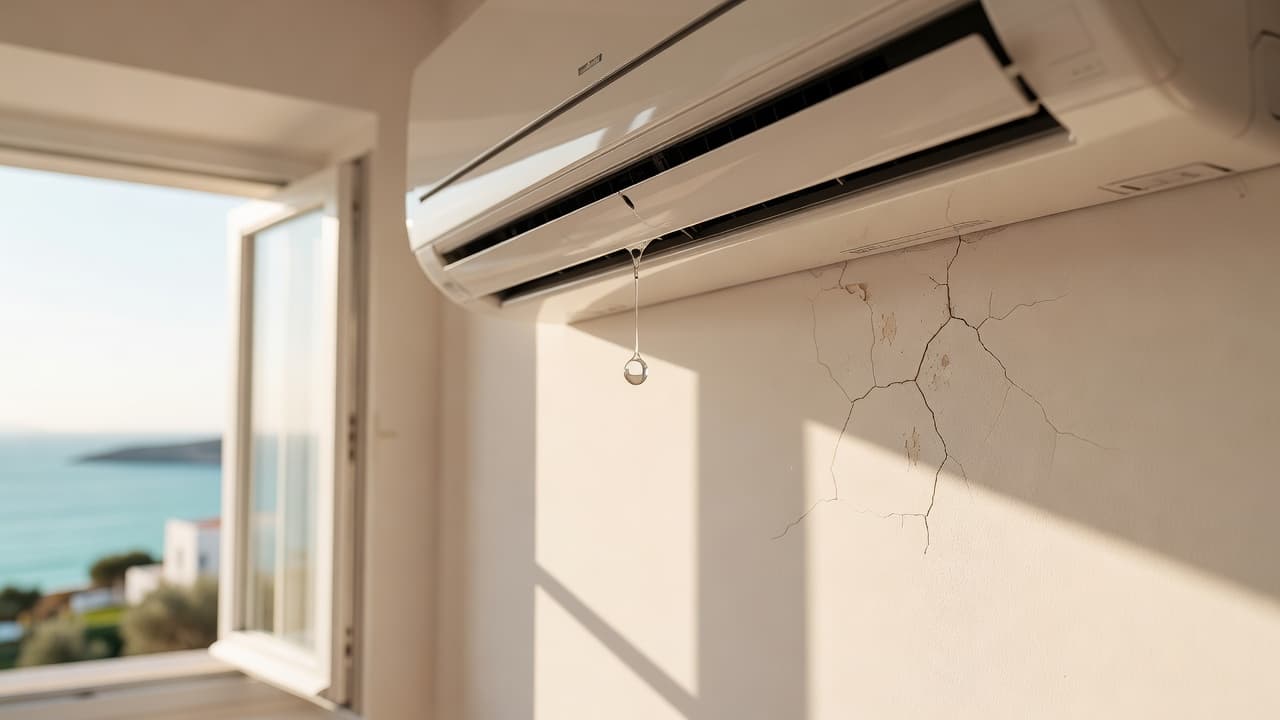
Slight water drip from the outdoor unit. The first time you run the AC, condensation trapped in the pipes drains out the outdoor unit's discharge pipe. A few drops are fine. If water pours out continuously or streams from the indoor unit's lower edge, stop the unit and call a technician — there may be a blockage or a pipe disconnection.
Stop and call a professional immediately if:
- The unit won't turn on despite new batteries and power checked at the socket.
- You hear a loud grinding, squealing or hissing noise from the indoor or outdoor unit (this suggests mechanical damage or refrigerant leak).
- The unit turns on but produces no cold air after 5 minutes of running.
- Water is pouring from the indoor unit (not dripping, but flowing).
- The outdoor unit is visibly damaged: cracked casing, bent metal pipes, or loose electrical connections.
- You smell a sharp chemical or burnt odour.
- Any part of the unit feels hot to the touch when it shouldn't be (e.g., the plastic casing of the indoor unit getting hot).
- The circuit breaker in your home's electrical panel trips when you turn on the AC.
Do not attempt to refill refrigerant, open the unit's casing, or manipulate any copper pipes or electrical connections. These tasks require specialised equipment, certification, and knowledge of Spanish building regulations (norma UNE-EN 378). A technician must do this work.
A qualified air conditioning technician will start with the same visual checks you've done, but they'll go further. They'll measure the temperature of the air coming out and compare it to the ambient temperature — if there's a gap of less than 12 degrees Celsius, the refrigerant charge may be low (often from a slow leak over winter). They'll listen to the compressor and check its electrical signature with a meter.
They'll inspect the condenser coils with a professional eye, looking for corrosion, especially in coastal properties where salt spray accelerates degradation. They may pressure-test the pipes for leaks, use a torch and UV dye to spot escapes of refrigerant, or replace failed capacitors (the small cylindrical components that help the compressor start).
If the unit is five years old or older and hasn't been serviced in the last two years, expect the technician to recommend a full professional clean of the condenser and evaporator coils. This isn't a commercial upsell — it's a genuine recommendation. A clogged indoor coil reduces cooling efficiency by 30–40% and can cause water backing up into your ceiling.
The technician should provide a written report (an informal one is fine, but many now use digital checklists) confirming what was checked, what was cleaned or repaired, the current refrigerant charge, and the date. Keep this for your records and your insurer.
- Run the AC for 10 minutes every two weeks during winter, even if you don't need cooling. This keeps the compressor oil flowing and prevents moisture from settling. Set it to a modest temperature (22–24 °C) so it doesn't actually cool your home.
- Clean or replace the filters every three months in normal use, and every month during peak summer (June–August). A clogged filter makes the unit work harder and drains it faster.
- Have a professional service visit once every two years, ideally in late April or early May, before the summer rush. In coastal areas, a yearly inspection is worth the investment.
- Check the outdoor unit after storms. Sea winds, dust storms and heavy rain can dislodge debris or bend fins. A quick visual once a month costs nothing.
You've done the basic checks and everything looks fine. Turn the unit on, enjoy the cool air, and know that you've caught potential problems before they became expensive repair bills. If anything seems wrong, don't guess — contact a professional air conditioning technician and describe what you've observed. They'll do the rest.