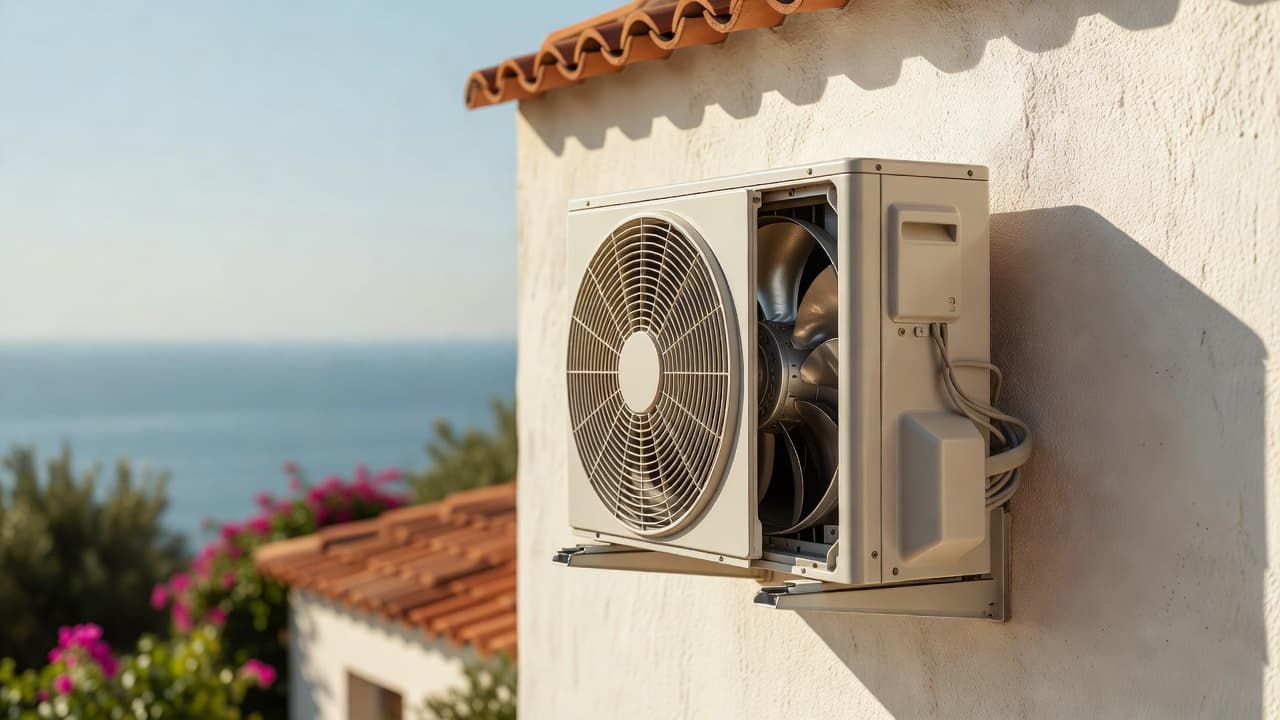
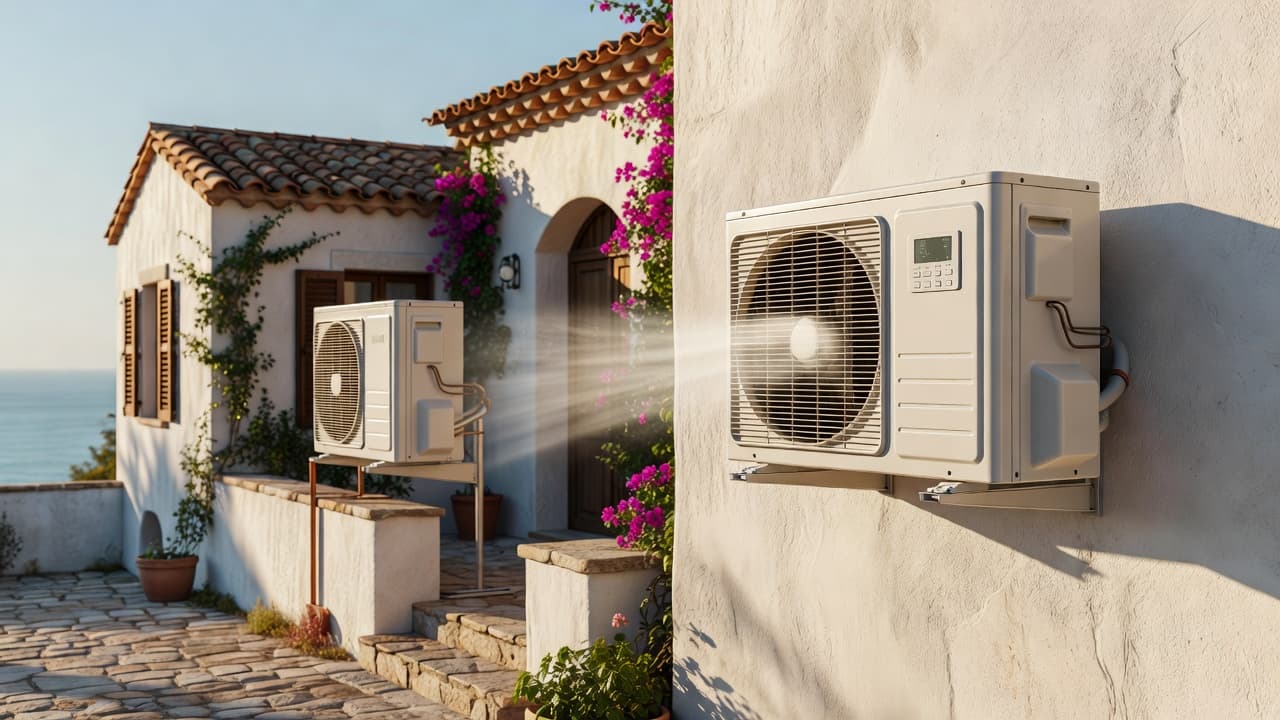
Air conditioners make noise because they have moving parts: a compressor (the motor that pressurises refrigerant), a fan that cools the outdoor unit, and internal fans in the indoor unit. As these parts age or wear, or when the unit is working harder than usual, the noises change.
Common causes of new or increased AC noise:
Compressor strain (low refrigerant or high outdoor temperature). The compressor works harder in peak summer heat, and if refrigerant levels are low due to a slow leak, it strains even more. This causes a buzzing or humming that gets louder as the day gets hotter.
Loose components. Vibration over months can loosen bolts, brackets, or internal fasteners. On the coast, corrosion from salt air accelerates this. The result is a rattle or clunking, especially noticeable when the unit starts or stops.
Dirty filters or blocked airways. If your indoor unit's filter hasn't been changed in months, or if the outdoor unit is caked with salt spray or dust, the fan has to work harder and sounds strained or wheezy.
Wear in the fan motor. The motor bearing can degrade, causing a grinding or squealing noise that worsens over time.
Refrigerant lines vibrating. The pipes connecting the indoor and outdoor units can vibrate against a wall or bracket, creating a rattling sound.
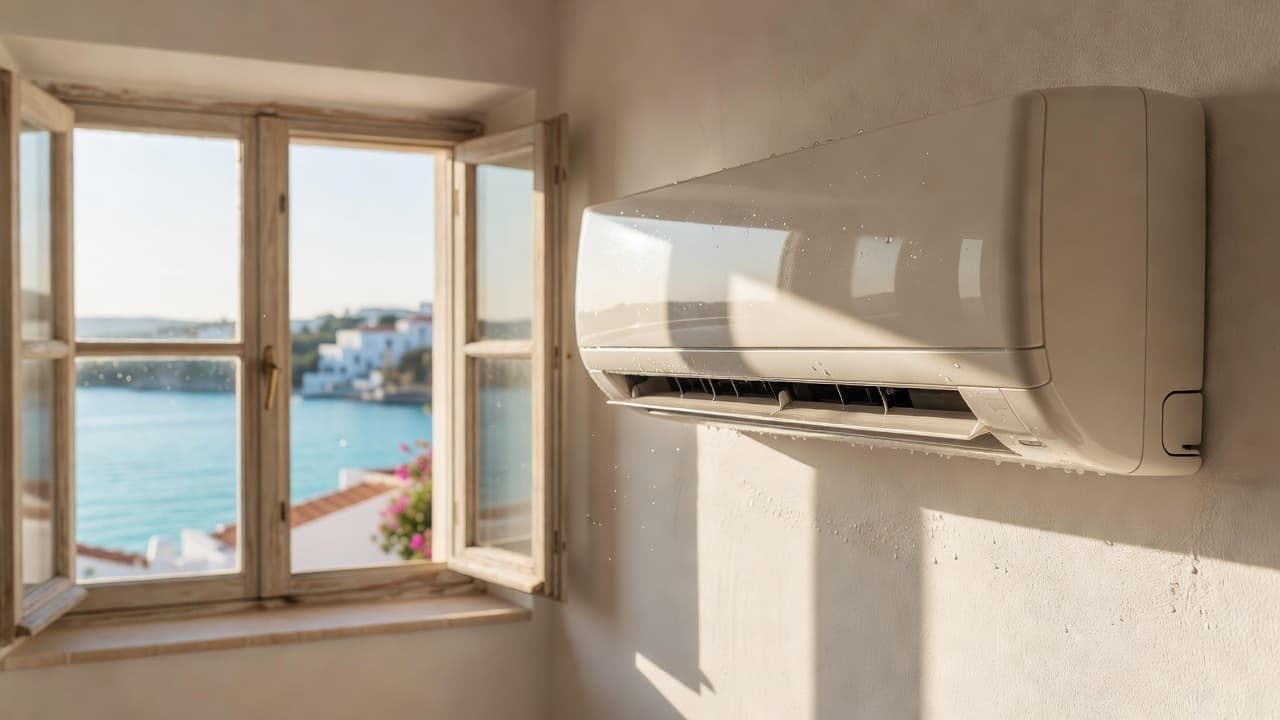
Ice buildup on the internal coil (in rare cases). If the unit is struggling to cool or the temperature is set very low, frost can form on the evaporator coil. When the defrost cycle kicks in, you might hear sloshing or hissing as the ice melts.
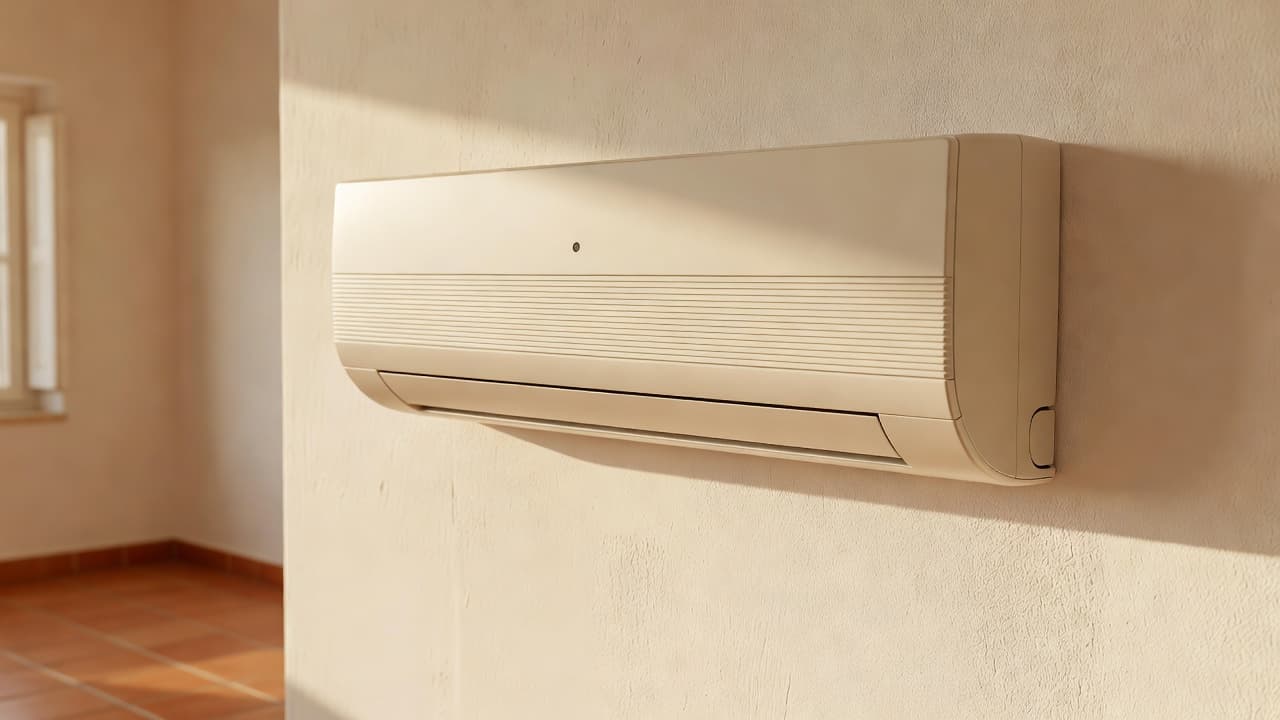
Change the indoor filter. This is the single most useful thing you can do yourself. A blocked filter makes the unit work harder and sound strained. Most split-unit ACs have a removable panel on the indoor unit that slides out to reveal a filter (usually white or grey foam or pleated paper). Turn off the AC, slide it out, and replace it with a new one of the same size. Cost: €5–€15. If you're not sure what size to buy, take a photo of the old filter to show the shop assistant.
Clear the outdoor unit. Use a soft brush or cloth to gently remove dust, leaves, and salt spray buildup from the outdoor compressor fins (the metal grid-like surfaces). Rinse it very gently with a hose if there's heavy salt spray, but don't use high pressure—you can damage the fins. Never spray water directly at the compressor motor or electrical connections.
Check that nothing is vibrating against the unit. Look for loose wall brackets, pipes that aren't properly secured, or nearby objects (a shutter hinge, a loose cable) that might rattle against the AC when it runs. Tighten bolts gently with a spanner if you spot an obvious loose bracket, or move any objects away.
Reduce the cooling load temporarily. If it's peak afternoon and the AC is straining, raise the thermostat by a couple of degrees and close off rooms you're not using. The unit won't have to work as hard, and you'll hear whether the noise reduces. This doesn't fix the problem but tells you whether the noise is load-related (less urgent) or structural (more urgent).
Ensure fresh air intake isn't blocked (if your unit has one). Some indoor units have a small intake vent for fresh air. If it's covered by a curtain or blocked by dust, the fan has to work harder. Clear it if you can.
Stop using the AC and call a technician immediately if you hear:
- Grinding or scraping sounds. This usually means internal parts are damaged or a bearing is failing. Using the unit further risks destroying the motor.
- High-pitched squealing. This often signals a failing motor bearing or belt. It won't improve and will get worse.
- Hissing or whistling sounds. This can indicate a refrigerant leak (serious) or a high-pressure line rupture. Refrigerant is hazardous and requires professional handling.
- Loud rattling accompanied by total loss of cooling. The compressor may have failed or a major component has come loose inside.
- Burning smell. Stop the unit immediately. This indicates electrical overheating or motor failure.
- Liquid sloshing sounds inside the unit. This suggests a blockage in the drainage system or a refrigerant problem. Turn it off—water can damage electrical components.
Also call a technician if:
- The noise is new and progressively getting louder day by day.
- The noise is accompanied by reduced cooling (the unit runs but the room stays warm).
- The outdoor unit is vibrating visibly or has come loose from its brackets.
- The noise happened after you heard a loud bang or crack (possible component failure).
- You live on or near the coast and have never had the unit professionally serviced. Salt air corrosion can weaken components silently until something fails suddenly.
When you call an air conditioning professional, they'll perform a diagnostic inspection that typically includes:
Visual inspection. They'll check the outdoor compressor for corrosion, loose bolts, or physical damage. They'll examine the indoor unit for dust buildup, filter condition, and loose parts. On coastal properties, they'll pay particular attention to salt spray damage, which is common along the Mediterranean.
Listening test. They'll run the unit and listen from inside and outside to pinpoint exactly where the noise originates. They'll note whether it's constant or intermittent, and whether it changes when the thermostat is adjusted.
Pressure and electrical checks. Using a pressure gauge and multimeter, they'll verify that refrigerant levels are correct and that electrical connections are sound. Low refrigerant pressure is a common cause of compressor strain and noise.
Filter and coil cleaning. If the noise is due to restricted airflow, they may clean or replace the filter, clean the evaporator coil inside the indoor unit, and clean the condenser fins on the outdoor unit. In coastal areas, this cleaning is often more thorough due to salt residue.
Component replacement or repair. If a bearing, fan motor, compressor, or other part is failing, they'll provide a quote for replacement. For older units (over 10 years), they'll advise whether repair or replacement makes economic sense.
Documentation. Once the work is complete, they should provide a receipt and a brief report of what was found and what was done. Keep this for your property records and for your insurance or landlord if applicable.
Change the filter every 3 months (or more often if you live in a dusty or coastal area). This is the cheapest maintenance you can do.
Have the unit professionally serviced once a year, ideally before the summer cooling season begins (April or May in Spain). A technician will check refrigerant levels, clean the coils, and tighten loose components. Cost is usually €80–€120 and can prevent expensive breakdowns.
Keep the outdoor unit clear of debris. Check it monthly, especially in spring (pollen and leaves) and after storms. On the coast, rinse it gently in autumn to remove salt spray buildup.
Don't block the indoor or outdoor unit. Ensure furniture, curtains, or storage don't obstruct air intake or exhaust vents. Restricted airflow makes the unit work harder and shortens its lifespan.
Use the timer and thermostat wisely. Running the AC constantly at very low temperatures (below 20°C) strains the compressor. A reasonable setting is 24–26°C, which is comfortable and efficient. Using the timer to cool before you arrive home (rather than cooling 24/7) reduces strain.
If you own the property, keep an eye on the age of the unit. Most AC systems last 10–15 years. If yours is nearing the end and you hear new noises, budget for replacement rather than repeated repairs. A modern, high-efficiency unit will be quieter and cheaper to run.
An odd noise from your air conditioner doesn't always mean disaster. In most cases, the fix is straightforward—a filter change, some debris clearing, or a professional service. But if the sound is accompanied by loss of cooling, a burning smell, or grinding, don't wait.
Our air conditioning professionals across Spain's Mediterranean coast can diagnose and repair your unit quickly, often the same day. If you've noticed a new noise and want a professional assessment without the guesswork, get in touch and describe what you're hearing.