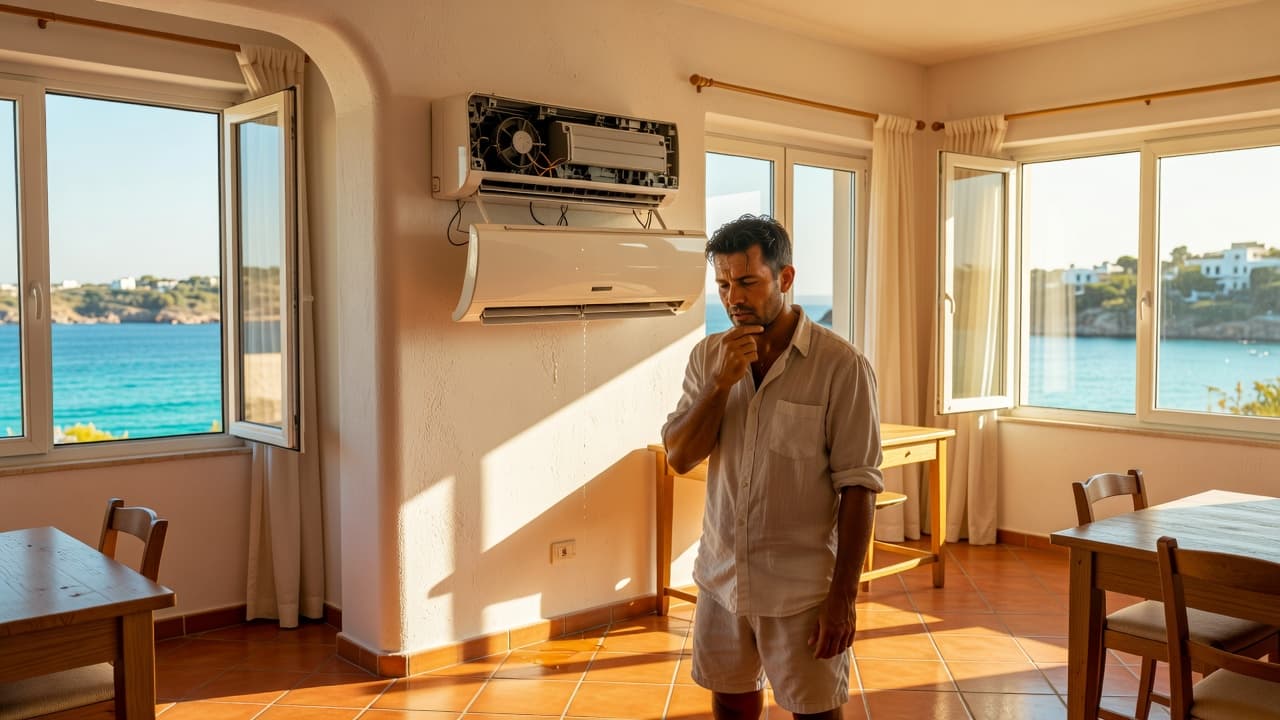
Air conditioning systems are pushed to their absolute limit during extreme heat. The outdoor temperature difference (between what's outside and what the compressor is trying to achieve indoors) is at its greatest, forcing the compressor to work continuously at maximum capacity. This rarely causes a complete breakdown by itself, but it exposes existing weaknesses:
- A clogged filter is the most common culprit. When airflow is restricted, the system overheats and shuts itself down as a safety measure.
- Low refrigerant (the fluid that cools the air) happens gradually over months or years through tiny leaks. In a heatwave, the system simply can't reach the temperature it's trying to maintain, so it either cycles on and off repeatedly or stops altogether.
- A faulty compressor (the heart of the system) may have been struggling for months, but only fails under extreme load.
- Electrical overload in summer is especially common on the Mediterranean coast. Your building's main electrical circuit may be overwhelmed by air conditioning, electric water tanks (termos eléctricos), and other appliances all running at once, causing the main breaker (ICP) to trip.
- Moisture inside the unit from salt air or humidity can corrode electrical components, particularly near the coast.
Your priority is to drop the indoor temperature without the AC. These methods work:
- Close all windows and external blinds during daylight. Direct sunlight heating the building is your enemy.
- Open windows wide in the early morning (5–7 a.m.) and late evening (9 p.m. onwards), when outdoor temperature drops below indoor temperature. This natural ventilation is surprisingly effective.
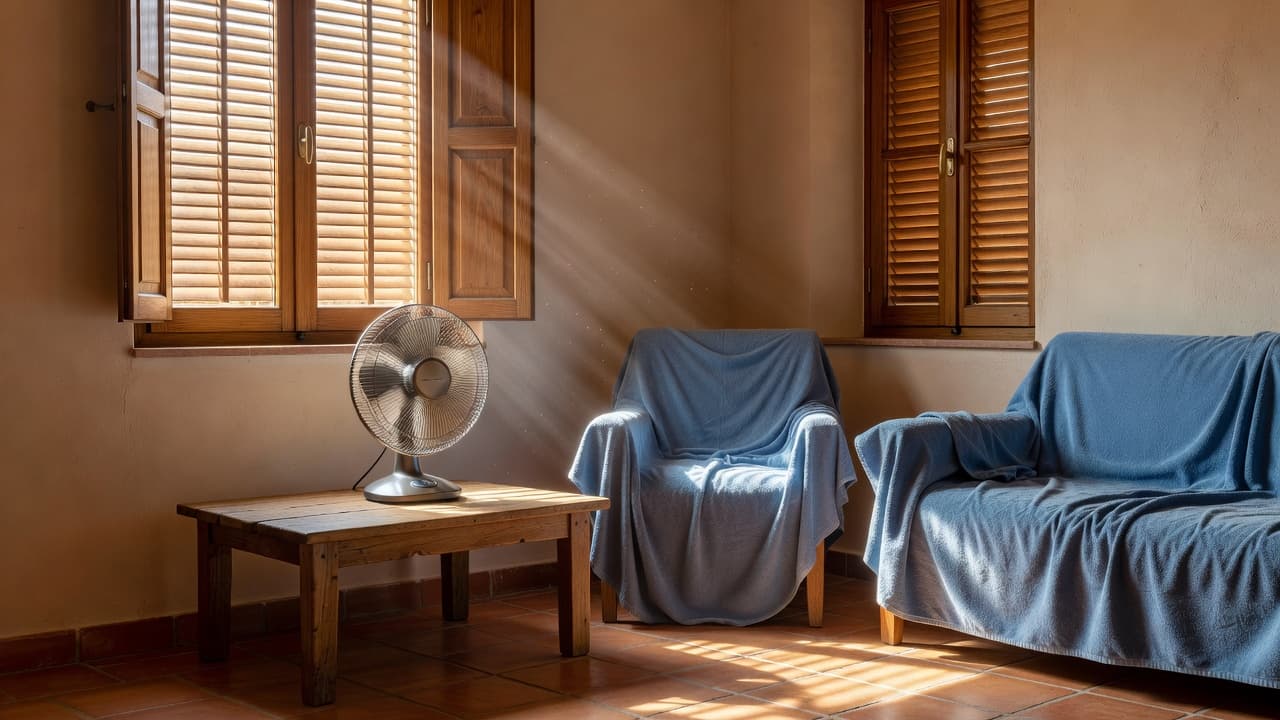
- Use floor or table fans pointing outward from an open window. This draws hot air out of the room. Position a second fan (if you have one) in another room to pull cooler air in from a shadier side of the building.
- Keep internal doors open so air circulates and you're not isolating hot spots.
- Stay in the coolest room of the house. Usually it's a north-facing room, a ground-floor flat, or a room with external shade.
- Draw curtains or hang wet sheets over windows. Wet fabric cools by evaporation and blocks heat.
- Drink water regularly. Staying hydrated helps your body regulate temperature.
- Avoid using the oven or other heat-generating appliances. If you must cook, use a microwave or eat cold food.
- Take cool (not cold) showers. This reduces your core body temperature without the shock of ice-cold water.
Stop and call the technician immediately if:
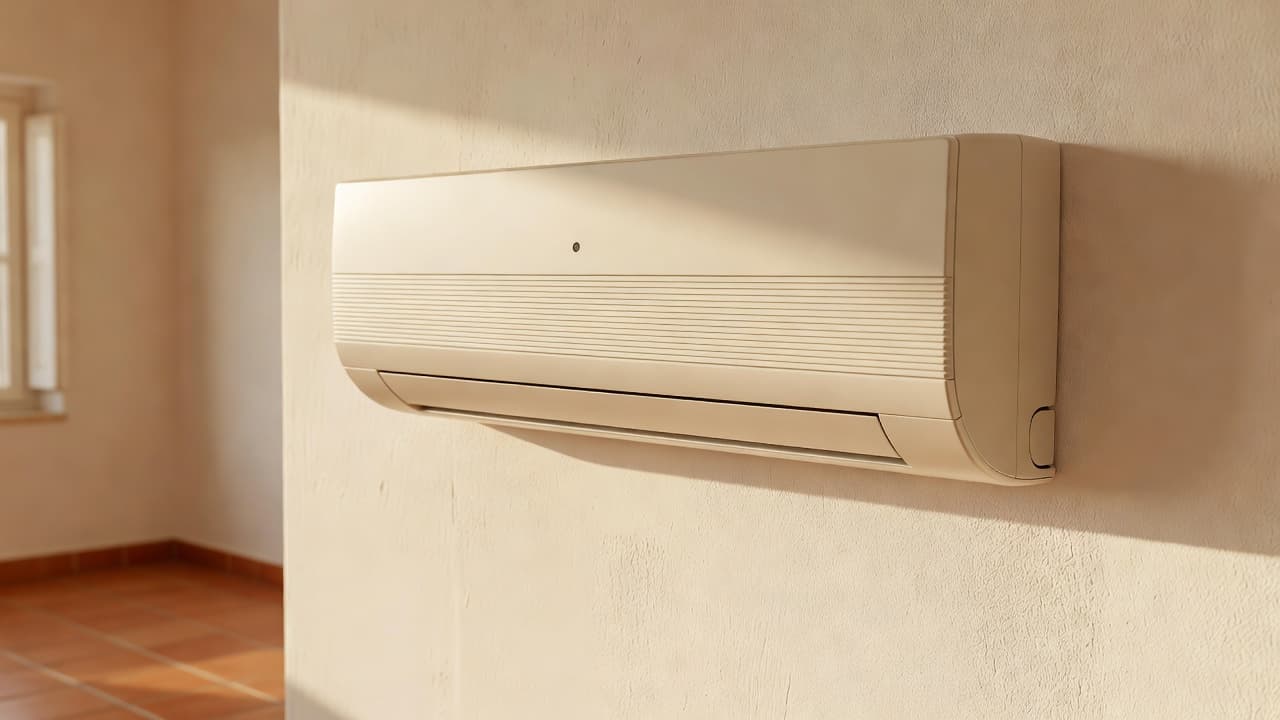
- The display shows an error code you don't recognise. Different codes mean different faults, and some indicate dangerous conditions (refrigerant leaks, electrical faults). Let the professional decode it.
- You smell a chemical odour (sharp, slightly sweet) coming from the unit. This suggests a refrigerant leak, which is dangerous and illegal to ignore. Do not attempt to top it up yourself.
- The unit is making an unusual noise (grinding, squealing, banging). This usually means mechanical failure—do not run it further.
- Liquid is leaking from the indoor unit. Some condensation is normal, but pooling water suggests a blocked drain line inside the system. Running it further may damage electronics.
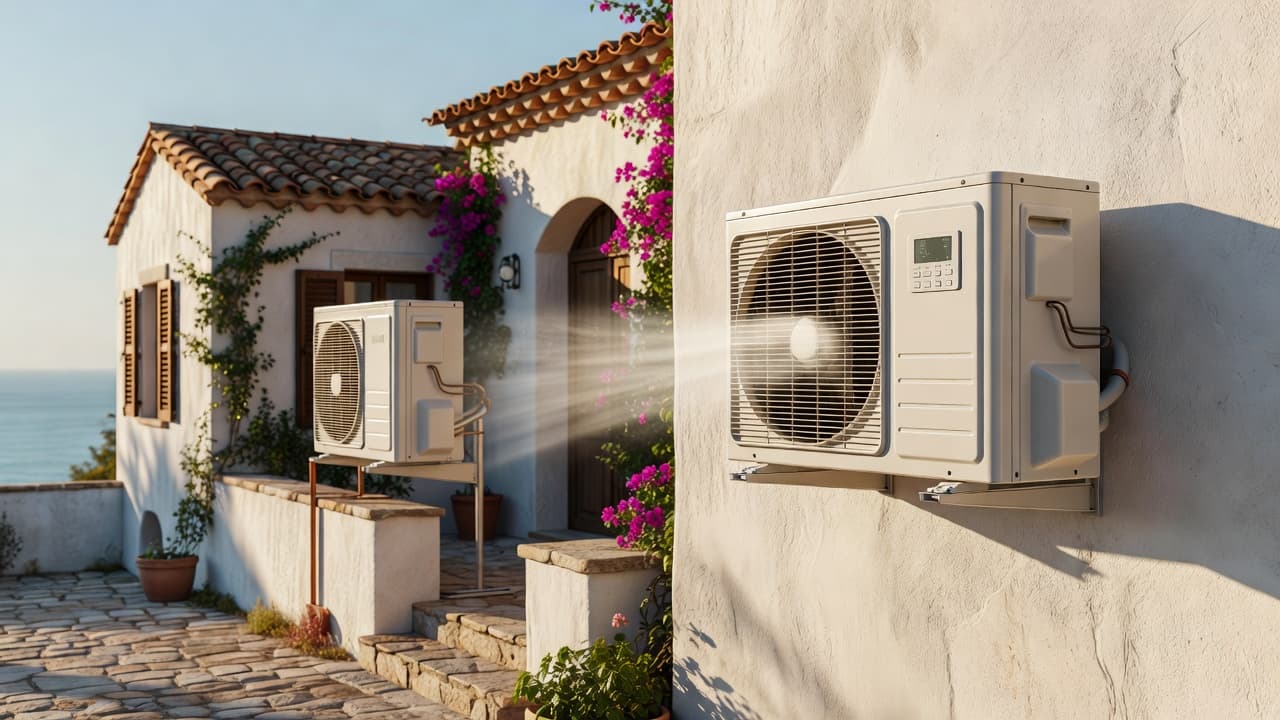
- The outdoor unit is visibly damaged (dented, broken fins, exposed wiring). Don't touch it. This is electrical and refrigerant work.
- Your building's main electrical breaker (ICP) keeps tripping when you try to turn the AC back on. This indicates an electrical fault, not an AC problem. Turn off the AC entirely and call an electrician before running anything else.
- You feel unwell or dizzy while trying to troubleshoot. Extreme heat is dangerous. Stop, move to a cool space, drink water, and call the technician. Your health comes first.
When the air conditioning technician arrives, they'll follow a standard diagnostic process:
They'll first ask you questions: When did it stop? What was the last thing it did (was it cooling weakly before it stopped, or did it just switch off)? Have you noticed any strange noises or smells? What temperature is it set to, and what temperature is the room actually reaching? This information narrows down the fault from the start.
They'll check the filter and outdoor unit, clear any blockage, and reset the system. If it restarts, they've likely found a simple fix. If not, they'll move to more complex diagnostics: checking electrical connections, measuring refrigerant pressure, testing the compressor, and inspecting the condenser coils (the outdoor fins) for corrosion or damage. On the Mediterranean coast, salt-air corrosion is common, and the technician will spot it immediately.
If a repair is needed, they'll explain what's wrong, what it costs, and how long it takes before they proceed. Simple jobs (filter replacement, drain cleaning, refrigerant top-up) take 30–60 minutes. Complex repairs (compressor replacement, electrical rewiring) take 2–4 hours and are more expensive.
They'll provide a receipt or invoice with a breakdown of labour and parts. If the system is still under guarantee, they'll note the fault and may claim the work against your warranty (especially important if you own the property and plan to sell). They should also advise you on whether the unit is nearing the end of its life.
- Clean or replace the filter every 3–4 weeks during the cooling season. A clogged filter is the single easiest problem to prevent.
- Have the outdoor unit checked and cleaned annually, ideally before summer starts. Salt spray and dust clog the fins and reduce efficiency.
- Use a programmable thermostat or set the temperature to 24–25°C rather than 20°C. Lower settings force the system to work harder and are less energy-efficient; you'll barely notice the difference at 24°C.
- Ensure the building's electrical system can handle summer loads. If your main breaker (ICP) keeps tripping, talk to your building manager or a qualified electrician about upgrading it.
- Avoid running the AC at full blast immediately after turning it on. Ramp the temperature down gradually; the unit will reach your desired temperature more steadily and with less stress.
- Have the refrigerant level checked during annual maintenance. Small leaks develop over time and won't be obvious until the system fails during peak heat.
If your AC has stopped working right now, don't wait. Contact a qualified air conditioning technician through MyCasa Spain—we connect you with certified professionals who speak your language and understand the quirks of Mediterranean coastal properties. They'll diagnose the problem quickly, explain your options, and get your home comfortable again.
Get in touch with an AC technician