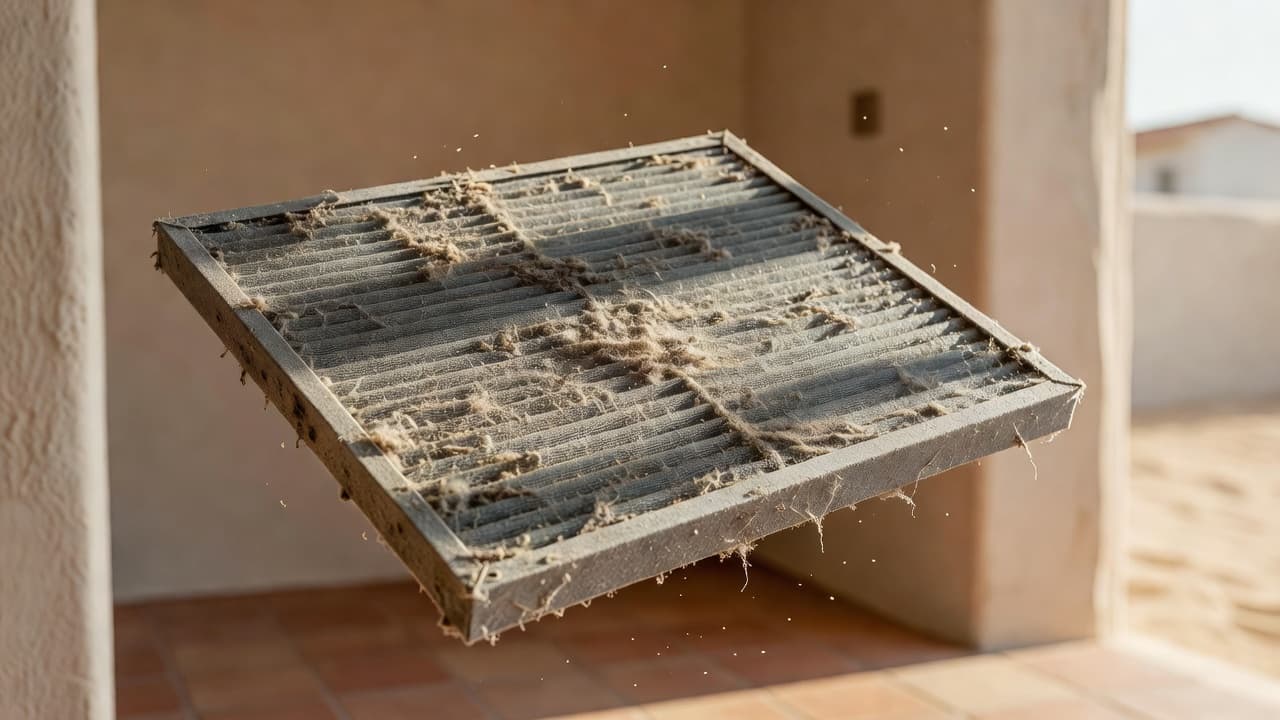
Your air conditioning unit pulls air from the room, cools it, and pushes it back. But before it does that, it passes through a filter. That filter is supposed to trap dust, pollen, pet hair, and other particles.
When the filter gets blocked, two things happen. First, the system has to work harder, so it sucks air more forcefully — and some of it bypasses the filter altogether. Second, a clogged filter becomes a breeding ground for mould and bacteria because moisture gets trapped in it.
On Spain's Mediterranean coast, this happens faster than elsewhere. Salt spray, humidity, pollen from coastal plants, and the fact that AC runs non-stop from June to September all conspire to clog filters quickly. Mould also grows faster in humid climates.
If you live in an urbanisation or apartment block, your AC may share ducting with neighbouring units, which means you could also be breathing in their air-borne particles. This is less common in detached villas, but worth knowing.
If you've cleaned or replaced the filter and still sneeze when the AC is on, or if you've noticed a musty smell:
Do not try to open the indoor unit yourself. There are refrigerant lines inside that require specialist handling. Opening them voids the warranty and is dangerous.
Close the bedroom or living room door to the room where the AC is running. This reduces the spread of mould spores or dust through the rest of the house.
Keep the filter clean. Check it weekly while you wait for a technician. A very blocked filter makes the problem worse.
Use a portable HEPA filter (a small air purifier) in the room for a day or two. This will help capture some of the spores or dust the AC is circulating. It's a temporary band-aid, not a fix.
Avoid using the AC in the early morning or late evening when outdoor humidity is highest. Mould grows in damp conditions. Run it during the warmest, driest part of the day when possible.
Open windows for 10 minutes every few hours, even in summer. This forces fresh air circulation and reduces the build-up of stale, mould-prone air inside the unit.
Call a technician immediately if you notice any of these:
Black, green, or brown patches visible inside the unit or around the vents. This is definitely mould and it needs professional cleaning.
A strong musty or damp smell when the AC is on. This means mould has colonised the pipes or coils inside the unit, which you cannot see or reach.
Sneezing, coughing, or wheezing that gets worse even after you've cleaned the filter. You may have a respiratory irritation from mould spores, and the unit needs a deep clean.
Water pooling or dripping from the indoor unit. This suggests a blocked drainage pipe (unrelated to allergies, but a sign the unit needs servicing).
The filter is inaccessible or you're unsure how to remove it. Forcing it or using tools can damage the unit.
You've replaced the filter and the sneezing continues without any musty smell. The problem may be elsewhere — poor ventilation, dust in the room itself, or allergens unrelated to the AC. But a technician should check the coils and ducts inside the unit.
If any of these apply, do not keep running the AC. Switch it off, open windows, and book a professional service visit. Breathing mouldy air is not a short-term nuisance — it can trigger or worsen asthma and allergies.
A technician will inspect the filter, but more importantly, they'll clean or flush the internal coils and drainage pipes. This is where mould actually lives in a split AC system.
The process usually takes 1–2 hours. They'll:
- Isolate the system and remove the front panel of the indoor unit.
- Visually inspect the aluminium fins and coils (the wet, cold parts where mould thrives).
- Use a specially formulated coil cleaner (not just water) to dissolve mould and bacteria without damaging the fins.
- Flush the drainage pipe that carries condensation water away from the unit. A blocked pipe is a mould factory.
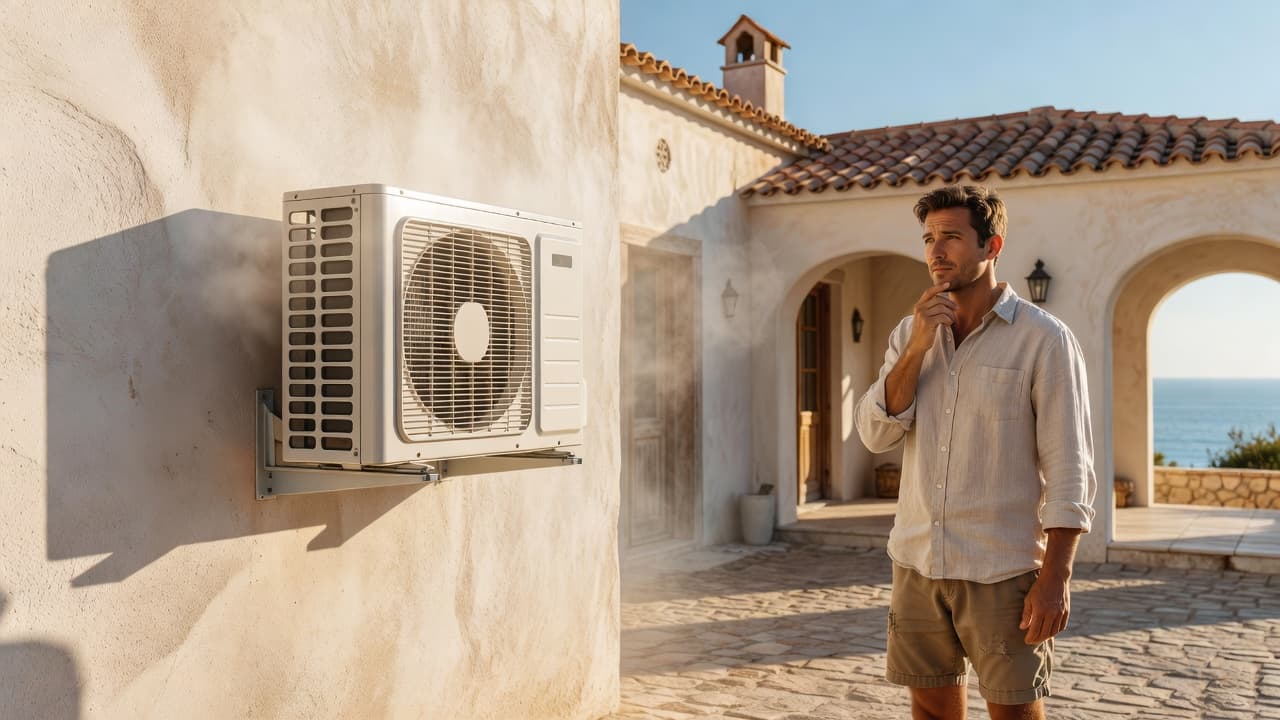
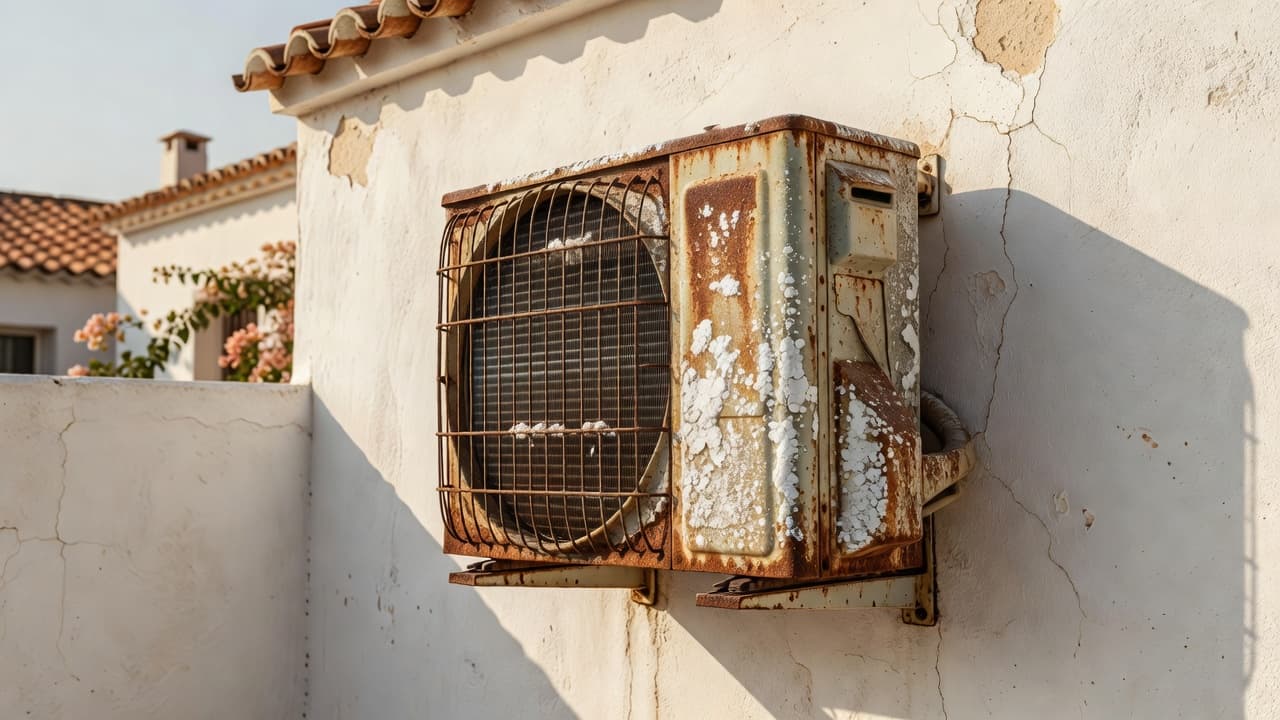
- Check the outdoor unit (the big box on your patio or balcony) for debris or blockages.
- Reassemble everything, run a test cycle, and confirm the smell is gone.
When they're done, they'll give you a service receipt. Keep this for your records — it's proof the unit has been maintained, which is important if you ever sell the property or make an insurance claim.
They may recommend repeating the clean every 12 months if you use the AC heavily or live in a very humid area. This is reasonable advice for the Mediterranean coast.
Check the filter every 2–4 weeks during summer. Not once a year. Every month. A quick look takes 30 seconds.
Replace or wash the filter as soon as it looks grey. Don't wait until it's almost black.
Clean the outdoor unit once a year. Leaves, insects, and dust block the condenser. Your technician can do this, or you can gently vacuum the fins if you're comfortable on a step ladder.
Use the "dry" or "fan only" mode on mild days. This circulates air without cooling, which reduces the moisture and mould risk.
Ensure your home has some natural ventilation. AC units work best when there's a small air exchange with the outside. Completely sealed homes trap humidity and odours.
If you're away for more than a month, leave the AC on "fan only" for 30 minutes every few days. This dries out the internal coils and prevents mould from taking hold.
If you've cleaned the filter and the sneezing continues, or if you suspect mould inside the unit, don't wait. A musty-smelling AC is not a cosmetic problem — it's a sign that the system needs professional attention. Our network of air conditioning technicians on the Mediterranean coast can diagnose and clean the unit in a single visit, often within 24 hours. Get a quote, no obligation.