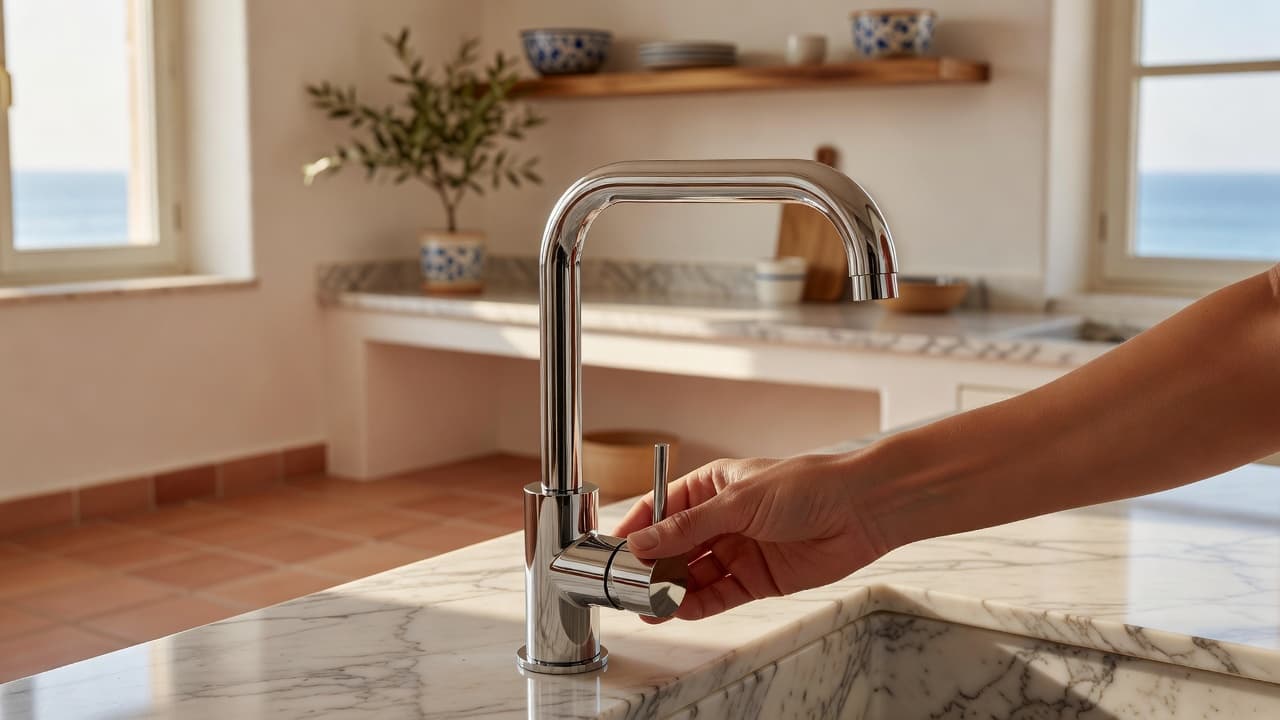
A tap becomes loose because the fixing nuts underneath the worktop gradually loosen due to vibration from water flow and general use. Every time you run the tap or move it slightly, the nuts can shift a fraction of a millimetre. Over months, these tiny movements add up. The problem is more common in older homes and in kitchens with a lot of water use.
Hard water deposits, temperature changes, and the constant micro-vibration of water running through the pipes all contribute. Loose taps are particularly common on the Mediterranean coast, where mineral-rich water can make seals stiffer and create stress on the fixing points.
If the tap is only slightly loose but you don't feel confident working underneath:
Tighten just enough to stop the wobble, without attempting the full fix. Place your hand on top of the tap and apply gentle downward pressure — if it moves more than 1–2 millimetres, it needs attention.
Use a cloth or towel as a buffer under the tap body to absorb vibrations and reduce further loosening while you arrange for a professional to visit.
Avoid using the tap more than necessary until it's fixed. The more water runs through it, the more vibration builds up.
Stop immediately and call a professional if:
Water leaks from the base of the tap even when the tap is turned off. This suggests a damaged washer or cartridge seal, which requires specialist tools to replace.
The tap is cracked or has visible damage to the ceramic or metal base. Tightening it could cause it to break completely.
You hear a grinding or squeaking sound when you try to tighten. This indicates internal damage.
The tap is mounted on a granite, marble or engineered stone worktop and you're worried about applying pressure. These surfaces can crack under uneven stress. A professional knows how to distribute the load safely.
The fixing nuts are stuck or won't budge after gentle attempts. Forcing them could strip the thread or crack the tap.
There's no access under the worktop — for example, in a fitted kitchen with no under-sink clearance. A handyman can work around this more easily.
In any of these situations, turn off the water at the main stopcock and contact a professional handyman or plumber. Don't attempt it yourself.
A handyman will approach the job much the same way you would, but with the benefit of experience and proper tools. They'll place protective covers on your worktop, locate the fixing nuts, use two spanners to hold and tighten, and test the water pressure and seals.
If the tap is leaking from the base rather than simply loose, they'll remove the tap entirely, replace the washers or the cartridge (the internal valve), clean the mounting surface, and reinstall it with a new seal. This takes longer — usually 30–45 minutes — but ensures the tap won't leak again.
The professional will also check the water supply pipes and the shut-off valve under the sink to make sure everything is in good condition. If they spot corroded pipes or a faulty valve, they'll flag this with you so you can plan a replacement before it becomes an emergency.
Check your taps every 6 months. A quick wobble test takes 5 seconds and catches problems early.
Don't over-tighten when you do tighten. A secure tap doesn't need to be rock solid — just firm enough that it doesn't move when you use it.
Avoid banging or dropping things under the sink. Impacts can loosen the nuts again.
In coastal homes, consider asking your handyman to check taps annually, especially if you have hard water. Mineral deposits can create stress on the seals and fittings.
If the tap keeps loosening, the problem may be that the nut is stripping or the thread is damaged. At that point, the tap needs replacing. A professional can advise whether repair or replacement is more cost-effective.
If you've tried tightening the tap and it's still loose, or if you've spotted a leak at the base, don't leave it — a small problem now can turn into water damage later. Our network of skilled handymen across the Mediterranean coast can visit, assess, and fix the problem reliably. Get in touch through our handyman service hub for a quick quote and a professional visit at a time that suits you.