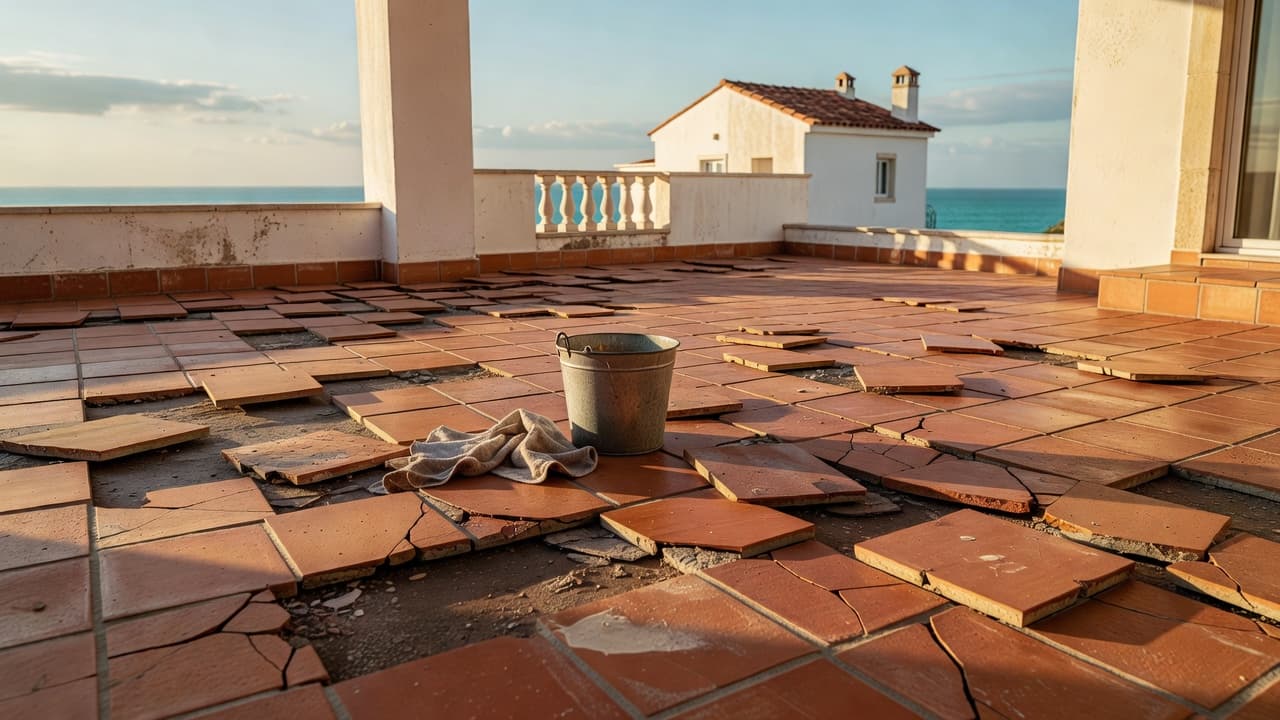
A terrace tile sits on a bed of adhesive (usually cement-based) over concrete. In normal conditions, this holds firm for years. A storm changes this in three ways.
Wind pressure and water ingress. Strong wind pushes water under the tile. If the adhesive bond is already slightly weakened (which is common in older homes or on exposed coasts with salt spray), the water creates a gap between tile and base. The tile no longer sits flush.
Temperature shock. Mediterranean storms often bring sudden drops in temperature. Tiles expand in heat and contract in cold. A large temperature swing stresses the bond, especially on south-facing terraces that heat up in the sun before a storm hits.
Ground movement. In rare cases (usually in older buildings or on slopes), water saturation or wind pressure can cause the concrete base to settle slightly. If the terrace isn't perfectly level or isn't reinforced underneath, even millimetres of shift will crack tiles and dislodge others.
On a coast (Costa Blanca, Costa del Sol, Balearics), salt spray accelerates corrosion of the adhesive and grout, making tiles more vulnerable to storm damage in the first place.
Your goal is to stop water getting underneath the tiles and prevent them from worsening. You're not repairing; you're containing.
For small cracks and grout gaps: Buy a tube of waterproof exterior sealant (silicone or polyurethane-based). Clean the gap with a dry cloth, apply the sealant smoothly, and let it cure for 24 hours before exposure to rain. This won't last years, but it will buy you time and stop water flooding underneath.
For a tile that's slightly loose but not broken: If it flexes but is still structurally whole, you can seal around its edges with the same waterproof sealant. Do not apply adhesive underneath yourself — this requires proper tools and knowledge to avoid trapping water. The sealant around the perimeter is a stopgap only.
For standing water on the terrace: Use a mop or squeegee to remove pooling water after rain. This reduces the weight and pressure on compromised tiles. Empty planters or outdoor furniture that collect water.
For a tile with a large crack or visible hollow: Do not seal it. Do not walk on it. Mark it and leave it for the professional. Sealing a severely damaged tile can trap moisture and cause structural rot underneath.
Stop immediately and contact a handyman if any of these apply:
- The tile flexes noticeably underfoot or rocks side to side. This means the adhesive has failed. Removing and resetting it requires proper tools and technique to avoid damaging neighbouring tiles and the concrete base.
- Cracks radiate in multiple directions from one point. This suggests structural stress, not just surface damage. The base may be compromised.
- You can see daylight or hollow spaces underneath the tile. Water is already underneath, and the adhesive has failed. Sealing won't help.
- Multiple tiles in a row are loose or cracked. This points to a larger problem — perhaps settling, poor drainage, or adhesive failure across the whole terrace. A professional needs to assess the base, not just the tiles.
- The terrace is on the edge of a cliff, steep slope, or borders a communal area. Any structural failure here is a liability risk. Call immediately.
- You notice water pooling underneath the terrace or seeping into the building below. This is a drainage or base failure, not just tile damage.
If you're uncertain, assume it's unsafe and call. A 15-minute handyman visit to confirm is cheaper than an injury or emergency repair.
The handyman will start by walking the entire terrace and tapping tiles with a small hammer. A hollow sound indicates a failed bond. They'll document all problem areas and assess whether the issue is isolated (just a few tiles) or systemic (the whole terrace or a large section).
For loose but unbroken tiles, they'll carefully remove the tile (a process that takes 20–40 minutes per tile, depending on how stuck it is), clean the concrete base, apply fresh adhesive, and reset the tile level. They'll check that it's flush with its neighbours and won't create a trip hazard. This usually costs between €30 and €60 per tile, plus call-out.
For cracked tiles, replacement is the only safe option. The handyman will remove the broken tile, assess the base, patch any damage, and fit a new tile of matching size and colour if available. Matching old tiles on terraces can be tricky — if the terrace is 10+ years old, the exact colour may no longer be made. The handyman will advise on this and show you options.
They'll also check the grout and reseal if necessary. On coastal properties especially, they may recommend a grout sealer to slow future salt and water damage.
At the end, they'll provide a report (useful for insurance) and explain whether the damage was localised or a sign of a larger problem with the terrace's installation or drainage.
Improve drainage. If water pools on your terrace after rain, the slope is too shallow or the drains are blocked. A handyman can assess and, if needed, improve the fall of the terrace or clear drainage channels.
Seal grout annually. On exposed or coastal terraces, sealing grout every 1–2 years slows water penetration and salt damage. This is a low-cost preventive measure.
Check under planters and furniture. Water trapped under heavy objects accelerates adhesive failure. Use feet or spacers that allow air circulation underneath.
Trim trees and clear gutters. Debris blocks drainage and water channels. After a storm, clear the terrace of leaves and branches so water can run off freely.
Report damage promptly to your insurer and your community. If you're in an urbanisation (urbanización) with a community of owners (comunidad de vecinos), the terrace might be a common area. You're legally required to report structural damage. If it's your private terrace, insure it properly — weathering and wear aren't usually covered, but storm damage is, if you claim quickly.
Your terrace is an extension of your home. Storm damage to tiles is common and usually straightforward to fix — but only if you act quickly and don't ignore warning signs. A few loose tiles today can become a crumbling hazard and a structural problem in weeks if water gets underneath.
If you're unsure whether a tile is safe, contact a qualified handyman to assess it. A quick inspection costs little and gives you peace of mind. If damage is widespread, document it with photos and report it to your insurer within days.
The Mediterranean weather is beautiful, but it demands respect. Don't walk on loose tiles, and don't delay the repair.