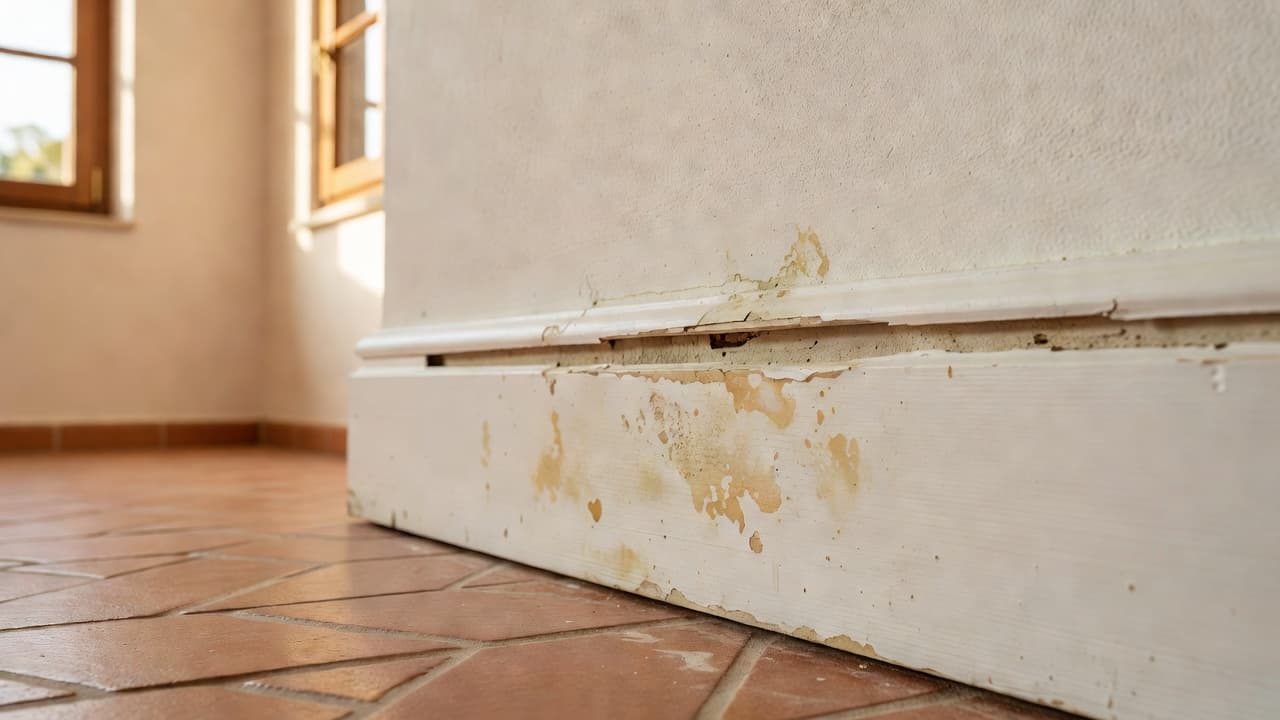
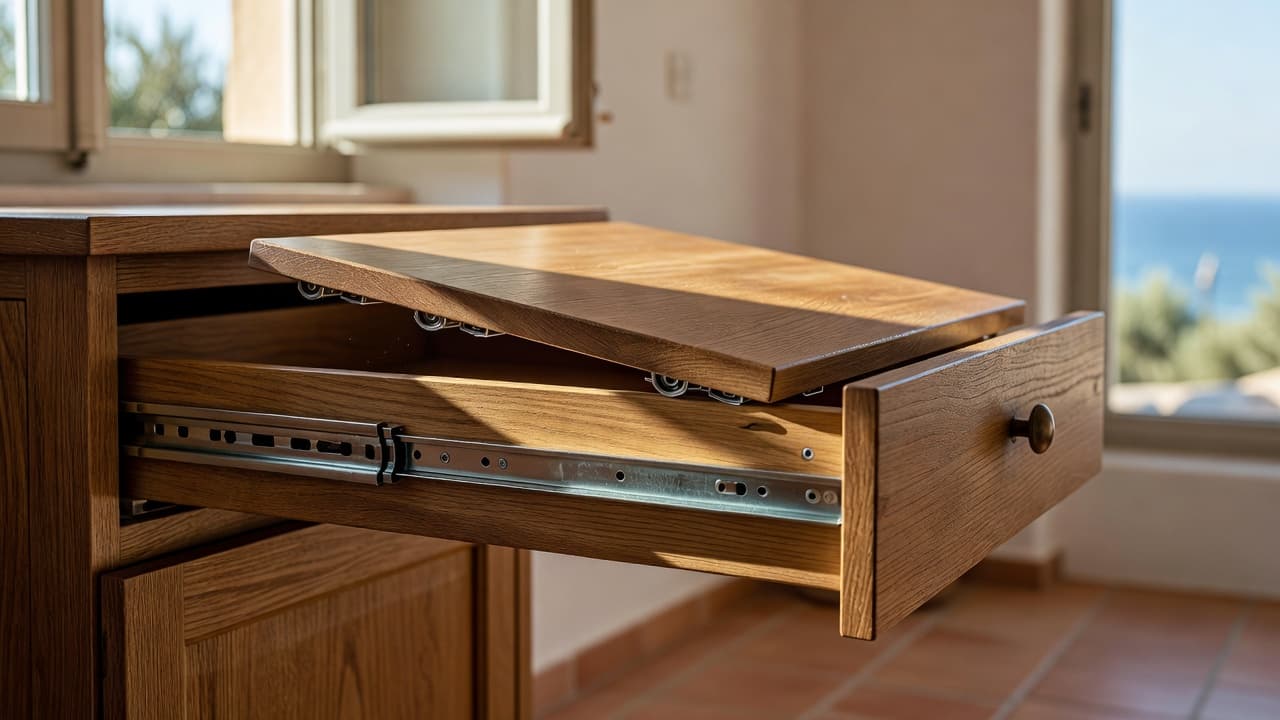
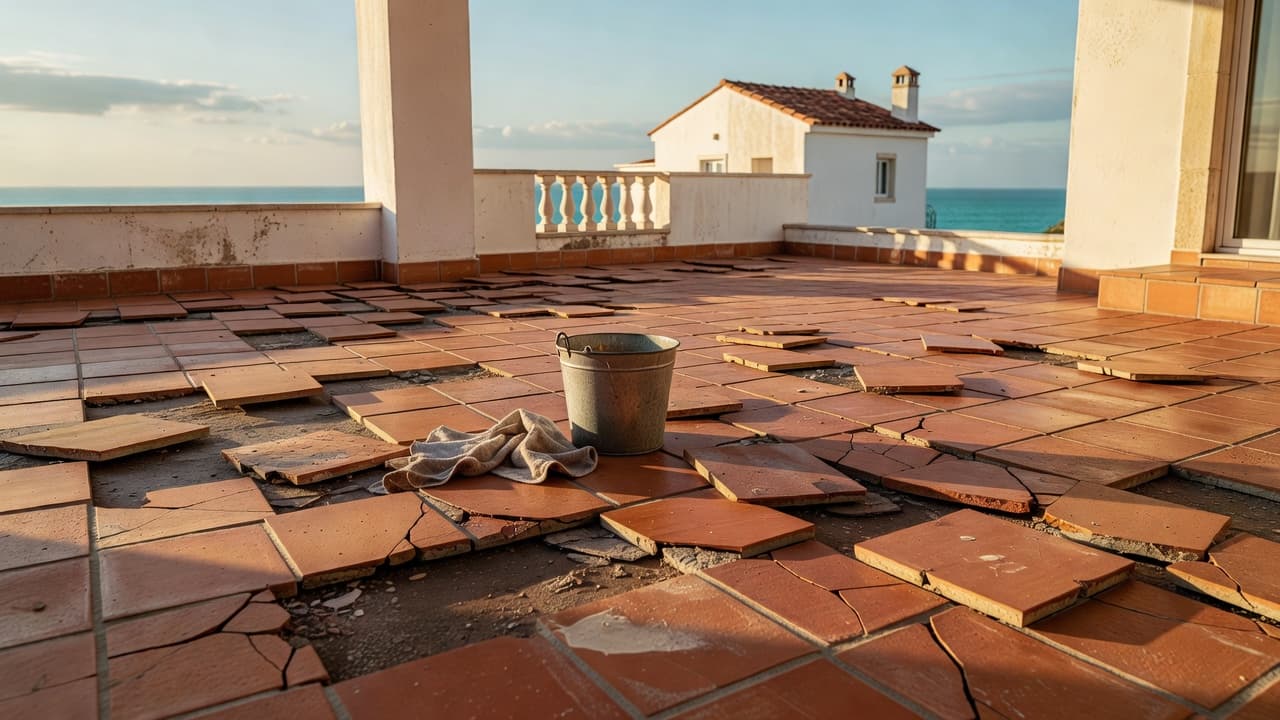
Damp doesn't just make things wet — it softens glue, warps wood, and damages the plaster bond between the board and the wall.
Rising damp is the most common culprit on Mediterranean properties. It occurs when moisture travels upward through the walls from the ground below, especially in older homes without a proper damp-proof course (a moisture barrier layer in the mortar). You'll recognise it because:
- The damage is worst near the floor and fades as you go up the wall
- It typically affects the base of external walls
- The plaster often has white, powdery salt deposits (a by-product of damp)
- It's cold to the touch
Leaks from above — from a bathroom, kitchen, or roof — appear suddenly in one location and may be accompanied by damp patches higher up the wall or ceiling. The skirting separates because the water is running down the wall behind it.
Condensation and poor ventilation cause damp that affects skirting boards in corners, on external walls, or in bathrooms and kitchens. The moisture doesn't rise; it clings to cold surfaces. This is common in properties with old single-glazed windows or inadequate extraction.
Lateral damp occurs when groundwater is pushed sideways through external walls — usually after heavy rain or in properties built into sloping ground. It's less common but serious.
On the Spanish coast, salt air and humidity can accelerate all of these, particularly in urbanisations near the sea where salt-laden wind enters walls through small cracks.
These won't cure the problem, but they'll slow the damage while you arrange a proper repair.
Remove the skirting board entirely. If it's badly damaged, take it off and set it aside. This allows the wall to dry out faster and prevents the board from trapping more moisture. It looks odd temporarily, but it's the safest move. Use a flat pry bar and work gently from the end, lifting gradually along the length.
Increase air circulation. Open windows on opposite sides of the room to create cross-flow. Run any extractor fans. Place a small, quiet fan in the corner to direct air along the damp wall. Keep this up for several hours a day until the professional visits.
Do not apply heat. A heater or hairdryer might dry the surface, but it won't stop the water source. It can even drive moisture deeper into the wall structure.
Do not apply sealant or waterproof paint. These trap moisture behind them and guarantee the problem will get worse.
Check pipes and gutters. If the damp is on an external wall, inspect the gutter above and any downpipes. Are they overflowing? Is water running down the outside of the wall? Is the ground sloping toward the house instead of away from it? Report these findings to the professional — they might be the quick fix.
Stop and call a professional immediately if:
- You see black mould. Mould indicates persistent moisture and poor air quality. It's a health issue and requires proper treatment.
- The plaster is soft or crumbly. The structure is deteriorating. You need a damp survey and remedial work.
- The damp is very extensive (covering more than one wall or rising above 1.5 metres). This suggests a serious structural issue — rising damp, a failed damp-proof course, or a major leak.
- The skirting board is warped, rotten, or smells musty. The wood is compromised and needs replacing after the damp is treated.
- You're unsure about the cause. A professional damp survey (€100–250) is always worth it. Guessing can lead to expensive, ineffective repairs.
Do not attempt to inject a damp-proof course yourself. This requires specialist equipment, knowledge of your wall type, and proper installation. A poor installation will fail and cost you more later.
A damp specialist or experienced handyman will arrive with a moisture meter and diagnostic tools. Here's what to expect:
First, they'll diagnose the cause. They'll measure moisture levels throughout the wall, inspect the external ground level, check for leaks above, and assess ventilation. They may ask about the history of the property and when the problem started. This diagnosis takes 30–60 minutes and is essential — the repair depends entirely on getting the cause right.
They'll produce a written report. A good specialist will give you a one-page summary explaining:
- The type of damp (rising, lateral, condensation, or leak)
- Why it's happening
- The recommended fix
- The expected cost and timeline
- A guarantee period (usually 10 years for rising damp remedial work)
For rising damp, the standard fix is a damp-proof course injection. This involves drilling holes into the mortar bed (every 10 cm horizontally) and injecting a liquid moisture barrier. It's not pretty during installation but it works. Cost: €1,500–3,500 depending on wall length. The wall is then left to dry (2–8 weeks) before new plaster and skirting are applied.
For leaks, the professional will trace the water source — often a broken pipe, failed grout, or roof penetration — and repair it. The wall then dries naturally, and plaster and skirting are replaced.
For condensation, the advice is usually ventilation improvement: better extraction fans, dehumidifiers, or thermal insulation upgrades. No structural work needed.
Once the damp is treated and the wall is dry, the skirting board is either refixed (if it's still sound) or replaced with new timber. They'll use a flexible adhesive designed for this purpose.
You'll receive a certificate documenting the work and the guarantee. Keep this — it's valuable proof of remediation if you ever sell the property.
Once the damp is fixed:
- Keep gutters and downpipes clear. Blocked gutters cause water to overflow and run down external walls. Check twice yearly.
- Maintain ground grading. Ensure the ground outside slopes away from the house, not toward it. Even a slight slope helps.
- Ventilate regularly. Open windows for 15 minutes daily, even in winter. Run extractor fans during and after showers and cooking.
- Monitor for early signs. Check skirting boards and lower walls every few months. Catch new damp early — it's cheaper and faster to fix.
- In humid rooms (bathrooms, kitchens, laundries), consider a permanent dehumidifier if condensation is recurring.
Damp affecting skirting boards is fixable, but only if you address the moisture source. Temporary cosmetic fixes will fail and waste money. A professional diagnosis is the first step — it's not expensive and it eliminates guesswork. Once you know the cause, the repair is straightforward and comes with a guarantee.
If you're in Spain's Mediterranean region and need help finding a qualified handyman or damp specialist, contact us for a quote. We work with professionals who speak English, German, and Dutch, and who understand the unique challenges of coastal properties.