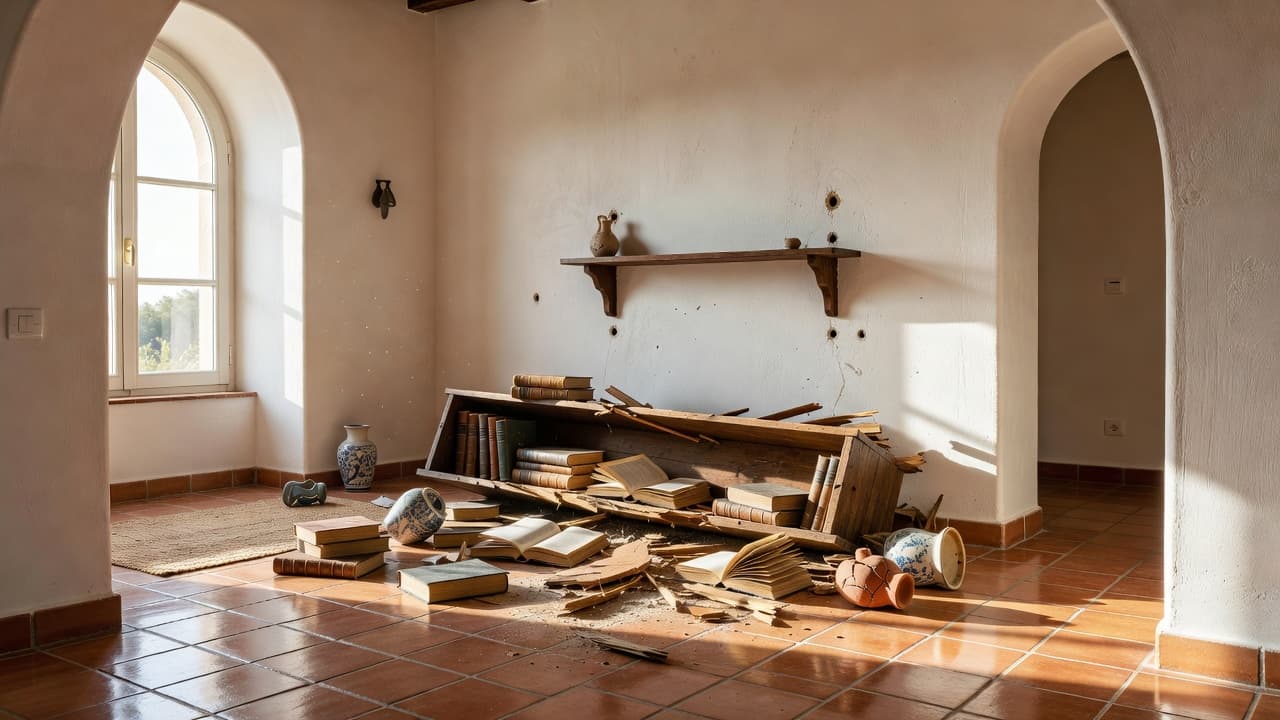
The most common causes in Mediterranean homes are these:
Wrong fixings for your wall type. Spanish coastal properties often have hollow ceramic block walls (common in urbanisations and villas built from the 1970s onward). These walls look solid but have air gaps inside. Standard plastic wall plugs don't grip properly in hollow walls. The shelf hangs for a while, then the weight slowly pulls the plugs out, and one day—collapse. This is the single most common reason.
Moisture and rust. Salt air near the coast corrodes metal brackets and bolts over time. Rust weakens the bolt and makes the bracket brittle. A rusted bracket can fail suddenly under weight.
Overloading. You've added more books or objects than the shelf was rated for. The wall anchors hold for months, then fatigue and fail.
Poor installation. The original shelf was hung without checking the wall type, or the brackets were hung into plaster only, not into the solid material behind.
Plaster degradation. Older homes with thick lime mortar plaster sometimes shed or weaken naturally, especially if the wall is damp or exposed to weather. The plaster holding the brackets crumbles, and the shelf goes.
Start here, and be honest about what you find.
Run your hand over the mounting area. If the plaster is soft, powdery or crumbles when you touch it, the wall is too weak to re-hang without professional repair. Don't try to force new plugs into damaged plaster—it won't hold.
Look for cracks radiating outward from the bracket holes. Small hairline cracks are minor, but if cracks spread a hand's width or more, or if you can see gaps where the plaster is separating from the wall beneath, the wall has shifted or the plaster is failing. This is a handyman job.
Tap the wall with your knuckles. A solid, deep thud means brick or concrete. A hollow, metallic sound means hollow ceramic blocks or a cavity wall. Hollow walls need different, heavier-duty fixings than solid walls. If you're not sure which type you have, this is the moment to ask a professional.
Press gently on the wall with your finger. It should feel rock solid. If it flexes or feels spongy, there's a structural or moisture problem that needs attention before you re-hang anything.
Look for visible bending, cracks or breaks. If the bracket doesn't return to its original shape when you gently straighten it, it's not safe to re-use.
Check for rust or corrosion. Light surface rust can be cleaned off with a wire brush or fine steel wool. But if rust has eaten through the metal (you can see holes, flaking, or the bracket is thin and weak), buy new brackets. Rusted brackets fail without warning.
Inspect the bolt holes. Are they stripped? Can you push the bolt around inside the hole? If the holes are enlarged or damaged, the bracket won't grip. Replace it.
Remove the old plugs carefully. Once the brackets are off, pull out the wall plugs from the holes. If they're soft, swollen, or crumble when you touch them, they've lost their grip. You'll need new, stronger fixings.
Look for cracks, splits or warping. If the wood (or other material) is cracked along its length, especially near where the brackets attached, the shelf is weakened and may not be safe to re-use. Consider replacing it.
Check the bracket-mounting holes on the shelf. Are they enlarged? Stripped? If you can wiggle the bolt around in the hole, the grip is gone. You can often reinforce these with new plugs or larger bolts, but it's a job for a handyman if you're uncertain.
Feel the shelf for soft spots or moisture. If any area feels spongy or damp, the material is degraded and unsafe.
Do not re-hang the shelf yourself if:
- The wall plaster is crumbling or powdery. You need wall repair before re-hanging.
- You see cracks spreading outward from the bracket holes, especially if they're wider than a finger or two. This suggests structural movement or serious plaster failure.
- The wall feels soft or spongy to the touch. This indicates moisture damage or deterioration.
- The brackets are bent, cracked, rusted through, or the bolt holes are stripped. Replace them with new ones, and choose the correct type for your wall.
- You don't know what type of wall you have. If you can't tell whether it's solid brick, concrete or hollow blocks, ask a handyman to check before you buy fixings.
- The shelf itself is cracked or warped. It may fail again, and you could lose items or hurt someone if it falls a second time.
- The shelf was very heavy and fell unexpectedly. This suggests the original fixings were undersized for the load. A professional should assess the wall and recommend proper fixings.
In any of these cases, close off the area, keep people away from where the shelf will go, and call a handyman. A two-hour consultation is far cheaper than repairing wall damage or replacing broken items twice.
When a handyman arrives to assess and re-hang your shelf, here's what to expect.
Wall inspection. They'll tap the wall, feel it, and possibly use a small probe to check whether it's hollow or solid. They may ask about the history of the shelf (how long it's been up, what was on it, whether it ever seemed to sag). They'll examine the plaster condition and check for signs of dampness or structural movement.
Bracket and shelf assessment. They'll measure the brackets, check whether they're salvageable, and inspect the shelf for damage. If the shelf or brackets can't be safely re-used, they'll recommend replacement and give you a cost.
Wall repair. If the plaster is damaged, they'll fill the mounting holes and any cracks with appropriate filler, sand it smooth, and repaint if needed. This is essential—hanging a new shelf over damaged plaster won't fix the problem.
Choosing the right fixings. This is crucial. Based on the wall type, they'll select the correct heavy-duty wall anchors or fixings. For hollow ceramic block walls (common on the Mediterranean coast), this might be heavy-duty toggle bolts, chemical anchors, or screws designed for hollow walls. For solid brick or concrete, traditional wall plugs with larger bolts may be fine, but they'll choose the right size and load rating.
Installation. They'll mark the holes level and square, drill precisely, insert the correct fixings, attach the brackets, and hang the shelf level. They'll check that everything is secure before placing any weight on it.
Documentation. A professional handyman will tell you the weight limit for your specific shelf and fixings, and may provide documentation (photos, notes) of what was done. Keep this in case you need to make claims or if you sell the property.
Cost. A straightforward re-hang with minor wall repair typically costs €80–150 in labour, depending on location and the extent of damage. If the shelf or brackets need replacing, add the material cost. If the wall needs serious repair (replastering, moisture treatment), the cost rises significantly. Always ask for a quote before agreeing.
Know your wall. Before hanging anything heavy, find out whether you have solid brick, concrete or hollow ceramic blocks. If you're unsure, tap the wall and listen, or ask a neighbour or local handyman.
Use the right fixings for the job. Hollow walls need heavy-duty anchors rated for hollow materials. Solid walls can use standard plugs, but choose the correct size (usually 10–12mm for shelves). Never guess—check the weight rating on the fixings package and stay well below the maximum.
Don't overload. Check the shelf's weight rating (if there is one) and the bracket rating. Add up the weight of what you're putting on it. If you're not sure, assume it's lighter than you think and don't exceed two-thirds of the rated capacity.
Check mounting holes on shelves. Before you buy a new shelf, look at where the brackets attach. If the holes are already enlarged or there are multiple sets of old holes, the shelf may be compromised. Reject it.
Inspect and maintain. Once the shelf is up, check it every few months. Look for sagging, cracks, or visible rust on the brackets. If you notice anything, don't wait—call a handyman.
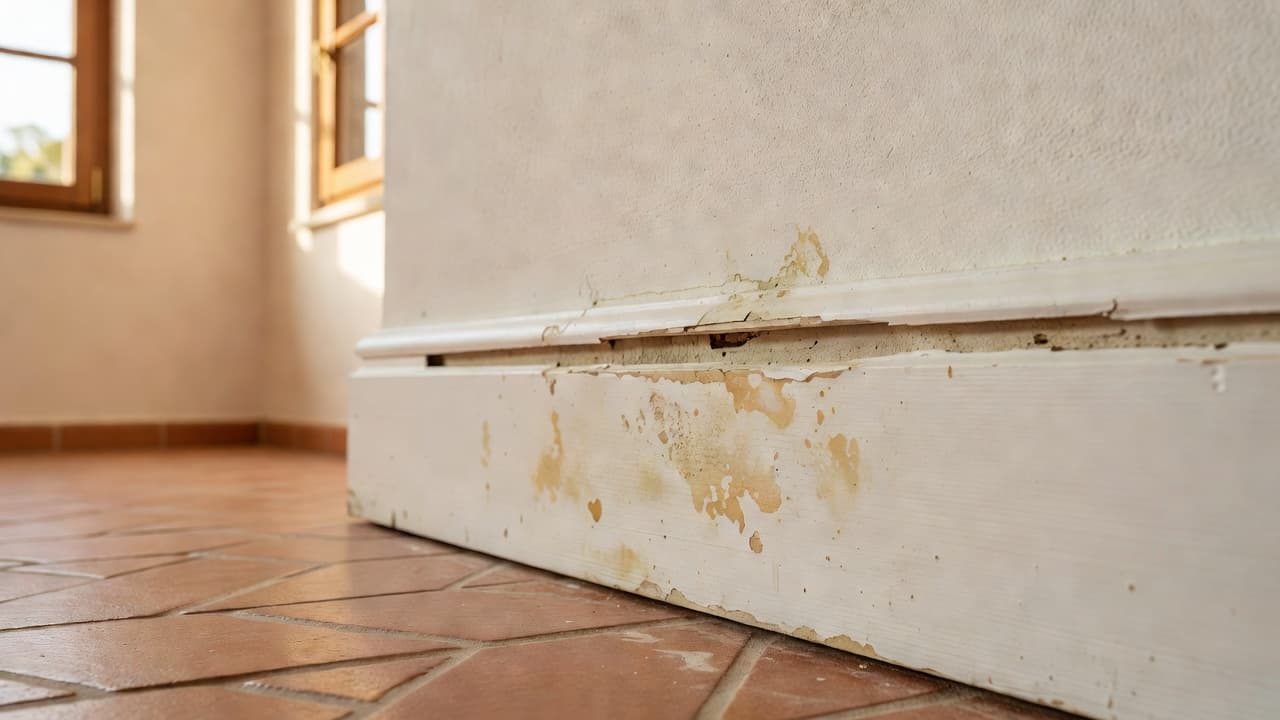
Don't ignore damp. If your walls or home feel damp, or if you notice water stains or mould, address the root cause before hanging new shelves. Damp weakens plaster and corrodes brackets.
Your fallen shelf is telling you something. Listen to it. Spend an hour inspecting the wall, the brackets and the shelf, and be honest about what you find. If you spot any of the warning signs above, call a handyman—it's the cheapest insurance against the same thing happening again next month.
If the wall, brackets and shelf all pass inspection, you can re-hang it yourself with confidence. But if you're uncertain about the wall type, the right fixings, or the condition of any component, hire a qualified handyman to do it properly. A few hours of professional help now saves money, frustration and risk later.