Wood is hygroscopic, which means it absorbs and releases moisture depending on air humidity. On the Mediterranean coast, the problem is severe because:
Salt air and high humidity. The sea provides constant moisture and salt particles that settle on the wood surface. Relative humidity on the coast often stays above 60–70% year-round, much higher than inland. This keeps the wood perpetually damp.
Uneven drying. The top surface of a chair or table is exposed to direct sun and dries quickly. The underside, joints, and interior grain dry more slowly. This creates internal stress — the outer wood shrinks while the inside is still wet — and the wood warps or cups to relieve that stress.
Salt crystalisation. Salt from spray doesn't just sit on the surface. It penetrates the wood and crystallises as water evaporates. These crystals push from inside, weakening the fibres and making warping more likely.
UV damage. Sunlight degrades the wood's surface layer, making it more porous and more likely to absorb moisture.
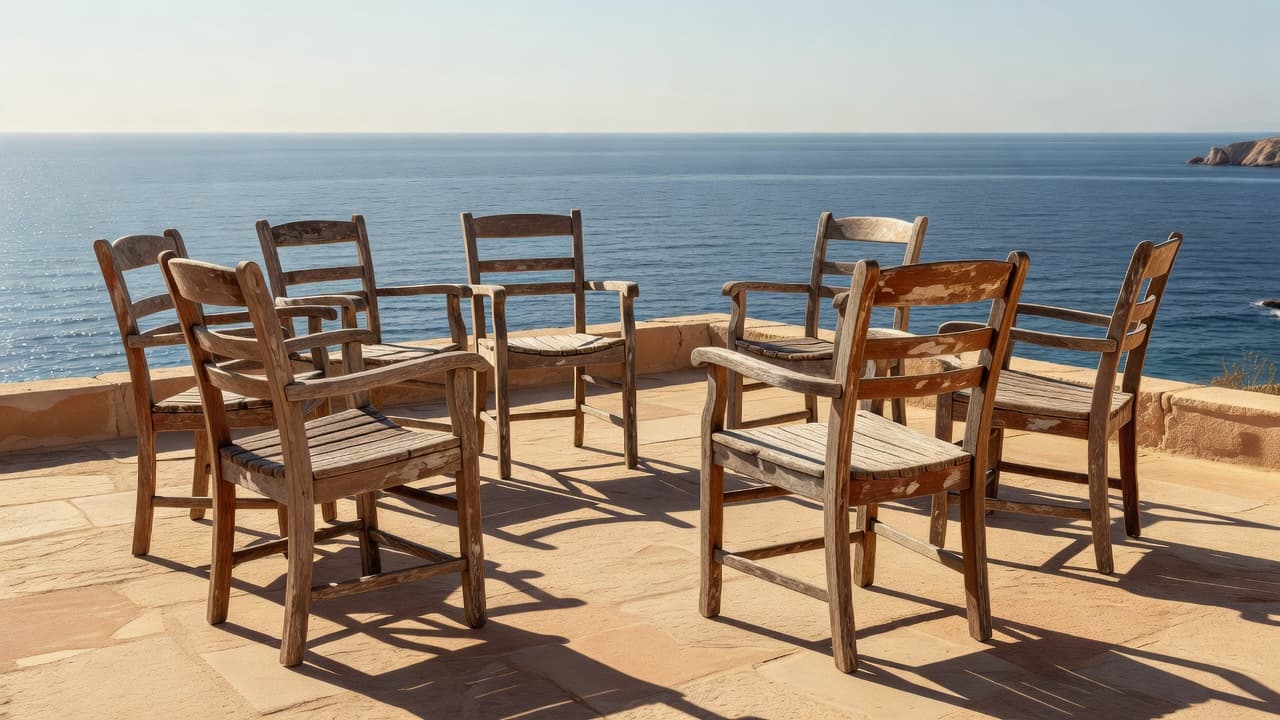
The result is usually cupping (edges of a plank curl up), twisting (a flat piece becomes spiral-shaped), or bowing (a straight edge becomes curved). Once the wood has warped, it rarely returns to its original shape, even if humidity drops.
Minor warping is sometimes reversible. If a table top has very slight cupping or a chair back has a gentle curve, there's a slim chance it could be improved:
- Seal the piece thoroughly with a quality exterior sealant, especially the underside and edges. Sometimes, preventing further moisture absorption and allowing the wood to re-equilibrate stops the warping from worsening.
- Store it indoors in a dry environment (a garage or shed) for several weeks. This allows the wood to dry out completely and may reduce mild warping.
- Have a skilled joiner assess it. In very rare cases, gentle steam treatment followed by careful clamping and re-sealing can reduce visible warping, but this is time-consuming and expensive.
Severe warping is permanent. If a seat is significantly twisted, a back is visibly bowed, or legs no longer sit flat on the ground, the wood has set in that shape. Forcing it straight risks snapping joints or cracking the wood. In these cases, repair typically means:
- Replacing the affected component (a new seat, a new back, or new legs) if the frame is still sound.
- Replacing the entire piece.
- Accepting the warping as part of the furniture's character, provided it's still safe to use.
Until you decide on a permanent solution, these steps will slow further damage:
Seal all exposed surfaces. Use an exterior wood sealant or oil suitable for the type of wood. Pay special attention to the underside (where moisture sneaks in), edges, joints, and any areas where the wood is exposed (a crack, a worn spot, the end grain). Apply two coats, waiting for the first to dry fully before the second.
Cover the furniture during heavy rain or high winds. A breathable garden cover (not plastic, which traps moisture) reduces salt spray and direct rain exposure. Make sure air can circulate underneath.
Rinse with fresh water after storms or salty weather. Salt deposits accelerate rot and weaken the wood. A gentle rinse with a hose removes deposits without damaging the surface.
Store it under shelter if you're away for long periods. If you have a holiday home and aren't there for months, moving the furniture into a garage or shed keeps it away from the worst of the salt air and temperature swings.
Tighten fixings regularly. Warping often causes bolts, screws, and joints to loosen. Check and tighten them every few months to keep the piece as stable as possible.
Stop and call a professional joiner (carpintero) if:
- The piece feels unstable or wobbly. Loose joints from warping can collapse suddenly, risking injury.
- You see deep cracks in the wood, especially in joints or across the grain. These may split further if you try to move or clamp the piece.
- The warping is severe (twists, bows, or cupping that noticeably affects how the piece sits or is used). Forcing it risks breaking it.
- You're unsure what type of wood it is. Different woods require different treatments and have different repair prospects. A joiner can advise whether repair is worthwhile.
- The furniture has sentimental value or is an heirloom. In these cases, professional restoration, even if expensive, is worth exploring.
If you contact a professional joiner (carpintero) about warped furniture:
Assessment. They'll examine the piece, check the extent of warping, inspect joints and fixings, and look for rot or structural damage. They'll advise whether repair is viable and worthwhile, or whether replacement of components is the better option.
Repair options. For mild warping, they may:
- Re-sand the surface to remove the worst of the unevenness.
- Strip and re-seal the piece with high-quality exterior sealant.
- Reinforce loose joints with additional fixings or wood filler.
For severe warping, they'll likely recommend:
- Replacing specific components (seat, back, legs) if the frame is solid.
- Stripping the piece down and rebuilding it with new wood where necessary.
- In rare cases, gentle steam treatment followed by careful re-assembly.
Timeline and cost. A simple assessment and re-sealing might take a few hours and cost €50–150. Full component replacement or restoration can run €200–600 or more, depending on the piece's size and complexity. It's worth getting a quote before deciding whether repair or replacement makes sense financially.
The key to protecting outdoor furniture on the Mediterranean coast is to accept that it will face constant moisture and salt attack, and to seal it accordingly.
Choose the right wood. Hardwoods like teak, cumaru, and ipe are naturally more resistant to moisture and salt than softwoods like pine or fir. They cost more upfront but last far longer with less maintenance. If budget is tight, softwood is fine provided you commit to regular sealing.
Seal it properly before use. New furniture should be sealed on all surfaces — top, bottom, edges, joints, and end grain — before it goes outside. This is your first line of defence.
Re-seal every 6–12 months. On the coast, annual sealing is the norm. If you're very close to the sea or in a humid urbanización, consider twice-yearly sealing (spring and autumn). This is the single most important maintenance step you can take.
Use marine-grade sealants. Standard wood stain or varnish breaks down quickly in salt air. Look for exterior sealants specifically formulated for coastal environments, UV protection, or marine use.
Store it sensibly. If you're not using the furniture, move it indoors — a garage, shed, or spare room. Even a few months of shelter can make a difference.
Avoid full plastic covers. They trap moisture underneath. If you cover furniture, use a breathable garden cover or simply accept that it needs regular maintenance rather than encasing it.
Check and tighten fixings regularly. Moisture and movement cause bolts and screws to loosen. A quick check every few months catches problems early.