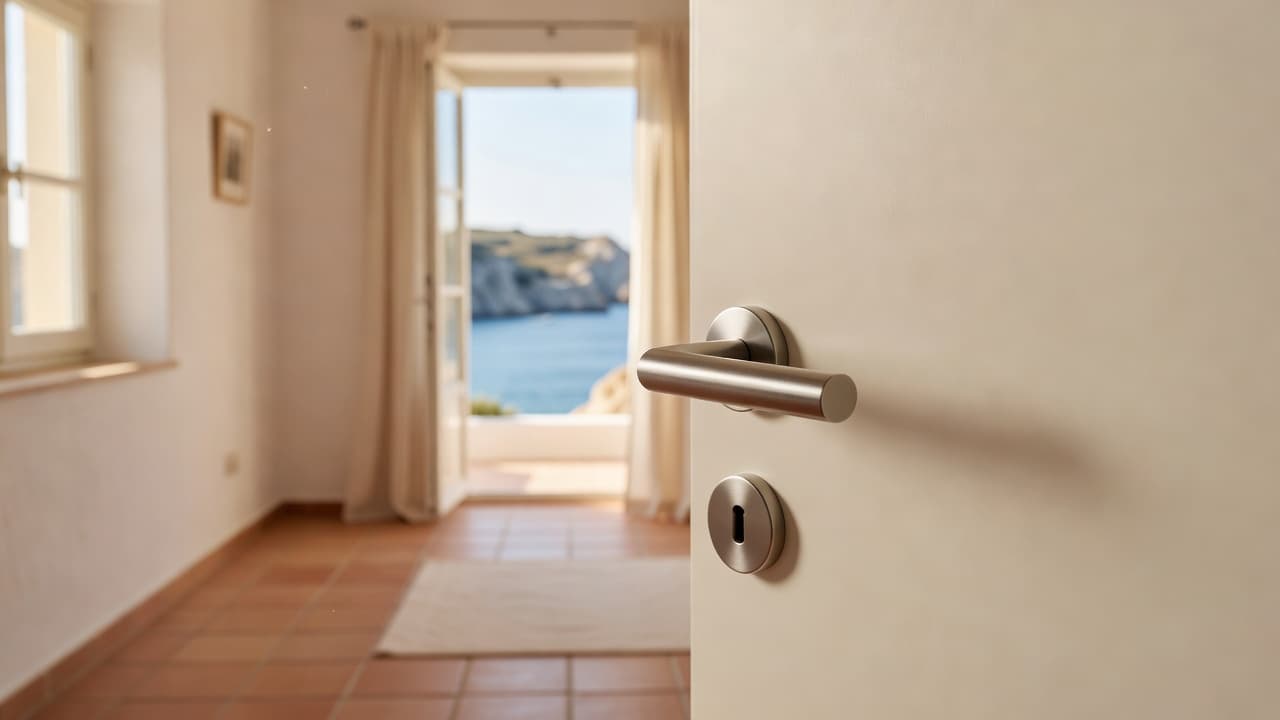
A door handle that spins without engaging has one of three problems:
The handle and spindle have separated. The spindle (the metal rod connecting the handle on both sides) has come loose inside the door. This usually happens when fastening bolts loosen over months or years, especially in properties near the coast where salt air causes slight corrosion. The handle turns but nothing happens inside the door.
The latch mechanism isn't moving. The latch (the metal bolt that extends into the door frame to hold it shut) is stuck or broken. The handle may move, but it's not pulling or pushing the latch in and out. This is often caused by rust, debris in the mechanism, or a broken spring inside the lock body.
The lock cylinder or barrel is damaged. The rotational part of the lock (where the key goes, or the deadbolt mechanism) is worn, misaligned, or has internal broken components. The handle spins freely because it's not connected to anything functional anymore.
In older homes or holiday properties that aren't used frequently, these problems develop because the mechanisms aren't lubricated or maintained. In busy coastal homes, salt air and humidity accelerate wear. In newer properties, factory defects or installation errors can cause handles to fail within the first few years.
If you need to use the door until the handyman arrives:
- For a door that should remain closed (external, or a room you want private): wedge it shut from the inside with a doorstop, wedge, or heavy furniture placed against it. This is not a security lock, only a temporary barrier.
- Check for an alternative lock. Many doors have a secondary bolt or chain. Use it. If the door is on a patio or sliding frame, close any additional locks or bolts.
- Disable the spinning handle if it's loose. If the handle spins wildly because it's come entirely loose, you can carefully remove the handle covers (usually held by small screws or Allen key bolts on the inner edge) and tighten the fastening bolt. This takes 2 minutes. Do not attempt to disassemble the lock mechanism itself — only tighten the visible fastening bolts on the handle.
- Keep the key in the external lock if you have one. If the door has a key lock, keep the key in place on the outside to prevent someone trying the handle.
What not to do:
- Do not force the handle to try to make it catch.
- Do not oil or spray lubricant into the mechanism — it will attract dirt and make it worse.
- Do not try to open the lock body or tamper with the cylinder.
Call a handyman immediately if:
- The door is an external entrance and you cannot secure it any other way.
- The handle is completely detached or missing.
- The door frame is cracked, splintered, or misaligned (the door won't close properly in its frame).
- You've already tried tightening the fastening bolts and the problem persists.
- The handle is hot to the touch or shows signs of burning (electrical connection fault — very rare, but stop using it).
- The door is a communal entrance to a block of flats or a shared building — notify the building manager or owner immediately.
For internal doors, call same-day if:
- You have guests staying and need the bathroom or bedroom door to lock.
- You need privacy for a specific reason (medical appointment by video call, etc.).
- The door is a child's bedroom and the lock is a safety feature you rely on.
The handyman will first assess the problem type by testing the handle movement, checking the latch mechanism, and inspecting the door frame alignment. They'll look at the lock body, handle fastening, and spindle connection to pinpoint whether it's a simple loose bolt, a broken spindle, or a failed latch or cylinder.
If it's a simple loose connection, they'll tighten the fastening bolts inside the door (usually accessible by removing the inner handle covers). This takes 15 minutes and costs €60–100.
If the spindle is broken or missing, they'll replace it with a new spindle of the correct length and diameter, and reinstall the handles. Cost: €80–150.
If the latch mechanism is broken, they'll remove the lock body from the door edge and either replace the latch plate or the entire mortice lock (the mechanism set into the door edge). This requires precise drilling or chiselling if the new lock is a different size. Cost: €120–250.
If the door frame is misaligned (the latch doesn't meet the strike plate on the frame), the handyman may plane or adjust the door, or move the strike plate slightly. This usually costs €80–180.
Before leaving, they'll test the handle in both directions, ensure the latch extends and retracts smoothly, and check that the door closes and locks securely. For external doors, they may also apply a light lubricant (silicone-based, not oil) to keep the mechanism moving freely.
- Tighten handle fastening bolts every 6 months. It takes 2 minutes with an Allen key. If you see a handle that moves slightly when you push it sideways, the bolts are loosening.
- Lubricate the lock sparingly. Once a year, apply a small amount of silicone spray or graphite lubricant to the key cylinder and latch mechanism. Wipe away excess. Do not use oil-based lubricants.
- Keep the door latch and strike plate free of debris. Dirt and salt residue (especially near the coast) can jam the mechanism. Wipe them clean quarterly.
- Check door frame alignment after heavy rain or wind. Movement in the frame can throw the latch out of alignment with the strike plate.
- Have the lock serviced with other maintenance. If you're getting the door painted or the frame sealed, ask the handyman to check the lock mechanism at the same time.
If your door handle is spinning without engaging, don't wait. For an external door, this is a security issue that needs attention today. Find a handyman in your area who can diagnose and fix the problem quickly. Most repairs take under 2 hours and cost between €80–250. Get a quote now and secure your home.